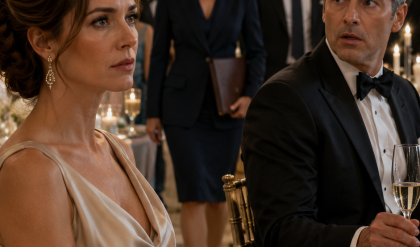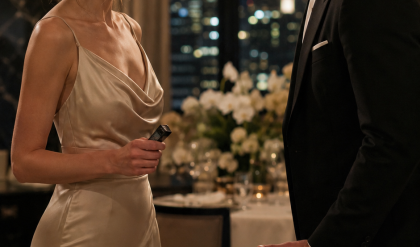
The night before her wedding, Olivia Hart heard her fiancé laugh into a microphone and say, “I can’t believe I’m stuck with her for life.”
The room behind him exploded with drunken applause.
Olivia stood alone in the private screening suite of the hotel she secretly owned, watching the man she was supposed to marry destroy himself on camera.
The live feed filled the entire wall in front of her, crisp and merciless. Ashborne House had always prided itself on discretion, but discretion did not mean blindness. The hotel’s bachelor suite had been wired that evening at Gavin Mercer’s own request so his friends could play old videos, deliver speeches, and roast the groom without dragging everyone into the ballroom. A technician had asked twice whether the audio should remain on throughout the night. Gavin’s best man had laughed and said, “Leave everything running. We’re not politicians.”
Now the microphone was giving Olivia the truth with professional clarity.
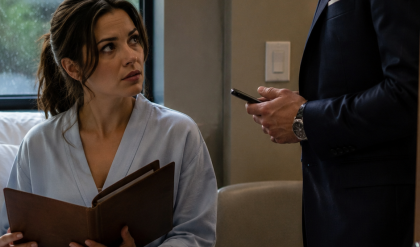
She stood barefoot on a deep gray carpet, wearing a silk robe the color of moonlight. One hand rested on the back of a velvet chair because if she did not hold something, she suspected the room might tilt. Outside the suite’s tinted windows, winter rain moved down the glass in long, nervous streaks. Below, the city glowed around the hotel like a conspiracy of gold and black.
On the screen, Gavin leaned back on a leather sofa with a glass of whiskey in his hand and a blonde woman sitting far too close to his knee. His tuxedo jacket was gone. His shirt was open at the throat. His smile was loose, handsome, careless in the way powerful men become careless when the room has rewarded them for too long.
He looked happy.
Not nervous.
Not guilty.
Happy.
The woman beside him, Tessa Vale, tilted her red mouth toward his ear and laughed as if she had already won something. She was supposed to be one of the wedding planners assigned through an outside event agency, though Olivia had known for weeks that Tessa had become something else. A glance held too long. A bracelet in Gavin’s car that did not belong to Olivia. A message at 2:13 in the morning that Gavin swiped away too fast. A scent of citrus perfume on his collar after he claimed he had been in a board meeting.
What Olivia had not known was how careless they would be once they believed she was asleep upstairs.
Gavin raised his glass again.
“Olivia is sweet, don’t get me wrong,” he said. “She is perfect wife material. Quiet. Loyal. Useful.”
Another man shouted, “Useful!”
Gavin grinned.
“You have no idea. Her family name opens every door. Her little inheritance paid for half the launch. After tomorrow, nobody can separate MercerArc from Hart money.”
Olivia’s fingers tightened against the chair until her knuckles paled.
Her little inheritance.
That was what he called the thirty-two-billion-dollar private trust whose board still considered Gavin Mercer a temporary risk under review. He had laughed at old money when it was not in the room and courted it whenever the room had a checkbook. He said he wanted to build something independent, something modern, something no family office could control.
Yet here he was, the night before their wedding, using her name like collateral in front of drunk men who clapped because cruelty made them feel included.
Tessa pressed a manicured hand to Gavin’s chest.
“Be nice,” she purred. “You still have to say vows.”
Gavin lowered his voice, but the microphone caught every word.
“I’ll say whatever she needs to hear. Then we get the merger signed, the board calms down, and you and I celebrate properly in Capri.”
The men howled.
One slapped the arm of the sofa.
Another raised a bottle like a priest blessing a sin.
Olivia did not cry.
That surprised her less than it might have a year ago.
Grief had visited her in stages before this night. It had arrived when Gavin stopped looking at her during dinner. It had deepened when his phone lit up with Tessa’s name at 2 a.m. It had hardened when he told Olivia she was too sensitive after she found the bracelet in his car. Tonight did not break her.
It clarified the damage.
On the screen, Gavin lifted his glass toward the camera.
“To marriage,” he said. “The most expensive prison a man can survive.”
Olivia reached for the remote and froze the image on his smiling face.
Behind her, a quiet knock sounded.
Elias Morgan opened the door.
He was her chief legal officer, the only person in the hotel who knew exactly who owned it, and one of the few men Olivia trusted to mistake panic for neither weakness nor permission. He wore a dark suit, no tie, his silver hair slightly damp from the rain. His gaze moved from Olivia to the frozen screen, then back to her face.
He understood enough without asking her to repeat it.
“How much of that was recorded?” Olivia asked.
His expression did not change.
“All of it.”
“Good.”
Her voice was calm enough to frighten even herself.
Elias stepped inside and closed the door behind him. “Do you want me to shut the party down?”
Olivia looked at the screen again. Gavin’s smile was wide, careless, almost boyish. Once, that smile had made her feel chosen. Now it looked like evidence.
“No,” she said. “Let him finish celebrating.”
Gavin woke up the next morning to sunlight, a hangover, and the comforting belief that the world still belonged to him.
His suite smelled of stale whiskey, expensive cologne, and the warm sourness of men who had laughed too loudly until too late. A half-empty bottle stood on the table beside cufflinks engraved with his initials. His tuxedo hung from the wardrobe door, black and immaculate, waiting for a groom who believed the most difficult part of his day would be pretending tenderness in front of cameras.
Tessa slept curled in the armchair by the window, wearing his shirt.
That should have worried him.
It did not.
The wedding wing of Ashborne House had been locked down for the weekend. Staff were discreet. Olivia was predictable. His friends were loyal because they loved his money, his invitations, and the illusion that standing near him made them important.
As for Tessa, she knew the plan.
After the wedding, Olivia’s trust connections would stabilize the public offering. After the honeymoon, Gavin would begin convincing Olivia that separate lives were normal for people of their status. He had rehearsed the argument in different forms. Freedom inside marriage. Modern partnership. Private arrangements. Emotional maturity. He knew how to make betrayal sound like sophistication if the woman listening had been trained to fear embarrassment more than loneliness.
His phone buzzed on the nightstand.
His best man, Miles, had sent twelve messages.
Bro, are you awake?
Call me.
Seriously, call me.
Did Olivia see anything?
Gavin sat up too quickly.
Pain cracked behind his eyes.
Tessa stirred. “What?”
“Miles is spiraling.”
He called.
Miles answered on the first ring. His voice sounded thin.
“Tell me the hotel feed was private.”
Gavin frowned. “What feed?”
“Last night. The bachelor suite camera. The in-room stream. Someone mirrored it to the bridal suite.”
For one second, Gavin’s mind refused the sentence.
Then memory returned in pieces.
The camera installed for speeches. The technician explaining the live feed. His friends laughing. His own voice, warm with whiskey, mocking the woman he was supposed to marry before noon.
Tessa stood from the chair, the shirt slipping from one shoulder.
“Gavin.”
He ignored her.
“Who saw it?”
“I don’t know,” Miles said. “Maybe Olivia. Maybe the wedding party. There was a recording icon.”
Gavin’s stomach turned cold.
He ended the call and dialed Olivia.
It rang once, then a message appeared.
The wedding schedule has been revised. Please remain in your suite until contacted.
No heart.
No explanation.
No Olivia.
Gavin stared at the screen.
Anger came first because fear felt too humiliating.
“She is being dramatic,” he said.
Tessa’s face had gone pale beneath last night’s makeup. “What did she see?”
“Nothing she can’t be talked out of.”
He swung his legs out of bed and reached for his shirt. His hands were not steady, so he buttoned it wrong twice.
Downstairs in the hotel’s executive office, Olivia was already dressed in a cream suit instead of a wedding gown. Her hair was pinned low. Her makeup was clean, almost severe. On the desk before her lay three folders.
Personal.
Legal.
Corporate.
Elias stood beside the window, watching rain move over the courtyard stones.
“He is calling again,” he said.
Olivia silenced the phone.
“Send the first notice,” she said. “To Gavin. To everyone.”
At exactly 9:00 a.m., every guest staying at Ashborne House received a message on hotel stationery.
Due to a private matter, today’s ceremony has been postponed. Brunch will be served in the conservatory at 10:30. Travel assistance is available through the concierge.
It was elegant.
Bloodless.
Devastating.
By 9:07, the bridal party group chat became a courtroom without a judge.
Is this real?
Did someone die?
Where is Olivia?
Gavin, what happened?
Gavin wrote nothing. He was too busy arguing with hotel security outside his own suite.
“I am the groom,” he snapped. “Move.”
The guard, a broad woman named Helena with a calm face and an earpiece, did not blink.
“Mr. Mercer, I have instructions to keep this floor clear until Miss Hart’s legal team arrives.”
“Her legal team?”
“Yes, sir.”
The word sir had never sounded less respectful.
Tessa stood behind him in a navy dress she had not zipped properly.
“Gavin, stop. People are looking.”
He turned on her. “Then go back inside.”
Her eyes flashed. “Do not speak to me like I’m the problem.”
He almost laughed.
In his world, problems were things other people caused by failing to obey quickly enough.
Then the elevator opened.
Olivia stepped out with Elias, her attorney Marian Cole, and two hotel executives Gavin had seen all weekend without understanding they answered to her. She did not look like a jilted bride. She looked like a woman arriving at a meeting already decided.
For a moment, Gavin forgot to be angry.
She was beautiful in a way he had neglected to notice because he had mistaken restraint for dullness. Her expression was composed, but her eyes held a coldness he had never seen from her. Not hatred.
Something worse for him.
Assessment.
“Olivia,” he said, softening his voice. “Can we talk privately?”
“No.”
The single word struck harder than shouting.
He lowered his tone further. “Last night got out of hand. It was a bachelor party. Men say stupid things.”
Olivia looked past him to Tessa, whose fingers had curled around the door frame.
“Women hear them.”
Tessa looked away.
Gavin stepped closer, but Helena shifted between them.
His face tightened. “Are you seriously letting staff block me from my own fiancée?”
Olivia’s gaze returned to him.
“This is not your hotel.”
“I booked the entire wedding wing.”
“You booked it under a discounted internal rate authorized by my office.”
He stared at her.
Something in the hallway changed.
Tessa’s mouth parted.
Miles, peering from the far end in a wrinkled shirt, went still.
Gavin gave a short laugh. “Your office.”
Elias handed him an envelope.
Gavin did not take it.
Marian did. She opened it and held the first page where he could see the letterhead.
Ashborne Hospitality Group.
Majority Owner: Olivia Hart.
Gavin read it once.
Then again.
His face lost color so quickly it seemed the hallway lights had dimmed.
Olivia said, “You spent your bachelor party insulting me in my hotel, using my staff, my cameras, my whiskey, and my name.”
No one moved.
“Now,” she continued, “we can discuss your exit.”
Gavin recovered badly.
Some men became quieter when cornered. Gavin became louder because volume had always worked on assistants, junior partners, waiters, and women before Olivia.
He pointed at the envelope as if paper could be intimidated.
“This is absurd. You cannot cancel a wedding because of a stupid joke.”
Olivia tilted her head. “Which joke?”
He blinked.
“The one about being stuck with me for life? The one about using my inheritance? The one about marrying me to stabilize your company? Or the one about celebrating with Tessa in Capri after the honeymoon?”
Tessa made a small sound.
Gavin’s jaw locked. “You spied on me.”
Elias spoke with perfect dryness. “You requested the bachelor suite speech feed yourself, Mr. Mercer. You signed the audiovisual authorization at 6:18 p.m.”
Miles muttered from the hall, “He did.”
Gavin shot him a look so sharp Miles retreated behind a potted palm.
Olivia watched the exchange and felt a strange calm settle through her. For months she had wondered whether confronting Gavin would tear her apart. Instead, the more he spoke, the easier it became to see him clearly. He had not become cruel overnight. He had simply run out of shadows.
Marian offered the envelope again.
“This includes notice of ceremony cancellation, termination of shared vendor obligations, revocation of Mr. Mercer’s access to Ashborne House private areas, and preservation notices regarding recorded statements relevant to pending corporate matters.”
“Corporate matters?” Gavin said.
Olivia did not answer immediately.
She let him stand in the uncertainty he had created.
Then she said, “MercerArc’s Series D extension closes Tuesday.”
His expression flickered.
“The lead investor is Northbridge Capital,” she continued. “Northbridge’s anchor limited partner is Hartwell Trust. Hartwell Trust is managed by Ashborne Private Office. Ashborne Private Office reports to me.”
The hallway became so quiet Olivia could hear the elevator cables hum behind the wall.
Gavin’s voice lowered. “You told me your family office was passive.”
“I told you I did not interfere with investments for personal reasons. That was true.”
“Then don’t start now.”
“I’m not.”
He stared at her.
“Your own words created a governance concern,” Olivia said. “You publicly stated that you intended to marry me to secure access to trust capital. You discussed misleading me about a relationship with a hotel contractor. You referenced a merger that has not been disclosed to all relevant parties. Those are not personal issues, Gavin. They are risk events.”
Tessa whispered, “Oh my God.”
Gavin turned on Olivia. “You’re going to ruin me because your feelings are hurt.”
For the first time that morning, emotion crossed Olivia’s face.
Not tears.
Disgust.
“You humiliated me in front of your friends, planned to exploit my name, and brought your mistress into the hotel where I was sleeping the night before my wedding. My feelings are the smallest part of your problem.”
Marian looked at her watch. “Miss Hart has a meeting in twelve minutes.”
Gavin laughed again, but there was no confidence left in it. “A meeting? Olivia, we are supposed to get married at noon.”
Olivia stepped closer.
Close enough that only the people nearest them could hear her next words.
“No, Gavin. At noon, I am going to stand in the ballroom and tell our guests why there will be no wedding.”
His eyes widened. “You wouldn’t.”
She held his gaze.
“You said I was quiet. You should have asked what I was saving my voice for.”
The conservatory brunch became the most expensive silence in the city.
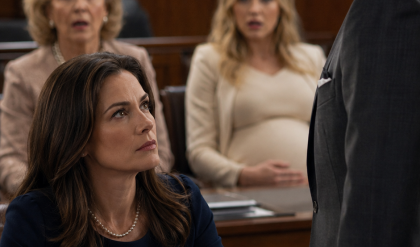
Guests sat beneath glass ceilings where winter sunlight poured over white flowers, untouched champagne, and silver trays of food too beautiful for anyone to eat comfortably. Women in pastel dresses leaned toward each other with the careful hunger of people pretending not to gossip. Gavin’s investors clustered near the windows, checking their phones with increasing alarm.
Olivia’s mother, Caroline Hart, sat alone at the front table.
She had arrived from Geneva at dawn, a woman in her late fifties with a silver bob, calm eyes, and a spine built from old money and older grief. She did not ask Olivia to reconsider. She did not say men made mistakes. She did not mention the embarrassment of canceling a society wedding after guests had flown across oceans.
She only took Olivia’s hand and said, “Tell the truth cleanly. Do not decorate it for people who will not carry the cost.”
That was why Olivia could walk into the conservatory without trembling.
Gavin followed two steps behind her, escorted by security. Not because he had been invited to speak, but because his attorney had insisted that removing him entirely would create a worse impression. Tessa had not been allowed into the room. She remained upstairs packing under the supervision of hotel staff.
At 10:45, Olivia stood at the small podium where the officiant should have welcomed everyone later that day.
The guests quieted for a heartbeat.
She saw what they expected: a tearful bride, a soft explanation, a promise that privacy would be appreciated.
They expected pain to make her polite.
She adjusted the microphone.
“Thank you for coming,” she said. “I am sorry for the disruption to your travel and your plans. The wedding will not take place.”
A ripple moved through the room.
Gavin stared at the floor.
Olivia continued, “This morning, I ended my engagement to Gavin Mercer after reviewing recorded statements from his bachelor party. Those statements included his admission that he viewed marriage to me as a way to secure financial access for his company, his mockery of our relationship, and references to a romantic relationship with another woman.”
Someone gasped.
Miles dropped his fork.
Gavin’s father muttered, “Jesus.”
Olivia kept her voice level.
“I will not play selected clips today. This is not entertainment. The relevant materials have been preserved for legal and corporate review.”
That sentence did more damage than any public replay could have done.
It turned scandal into evidence.
Across the room, Gavin’s lead investor, Daniel Cross, stood so abruptly his chair scraped the floor. He looked at Gavin, then Olivia, then his phone. His face had shifted from wedding guest to man measuring exposure.
Olivia saw it.
Gavin saw it too.
“All travel costs for guests will be covered by Ashborne Hospitality,” she said. “Any gifts already sent will be returned or donated according to the sender’s preference. I ask that you respect the privacy of my family and the staff who worked hard for an event that will no longer happen.”
She paused.
Her hand rested lightly on the podium.
“One more thing. Please do not mistake this for tragedy. A wedding ending before vows are spoken is not a failed marriage. It is a door closing before a house catches fire.”
For the first time, people looked at her not with pity, but recognition.
Caroline Hart began clapping.
It was one clean sound.
Then another.
No one wanted to be first after her.
Then the room followed.
Gavin looked up, stunned, as applause rose around the woman he had called useful.
Olivia stepped away from the microphone.
She did not look back.
Tessa tried to leave through the service corridor with two suitcases and Olivia’s diamond hairpiece in her purse.
That detail became important later.
At first, she moved quickly, head down, sunglasses covering half her face though she was indoors. A junior housekeeper recognized the hairpiece case because she had placed it in Olivia’s dressing room herself the night before. She alerted security without raising her voice.
Helena stopped Tessa near the freight elevator.
“Miss Vale, we need to check your bags.”
Tessa’s smile appeared too fast. “I am a contractor, not a prisoner.”
“No one said you were.”
“Then move.”
Helena looked at the camera above the corridor, then back at her. “Bag check is required under the event contractor agreement.”
Tessa’s confidence faltered.
The old version of her life had trained her to perform superiority around staff. She had forgotten that staff noticed everything. They noticed missing jewelry, altered schedules, who left whose room, which guest snapped at a waiter, and which woman cried silently in a stairwell before fixing her lipstick.
“Fine,” Tessa said.
The first suitcase held clothes, shoes, and a bottle of perfume from the bridal welcome gifts. The second held lingerie, a hotel robe, and an envelope of cash Gavin had given her. Her purse held the diamond hairpiece wrapped in tissue.
Helena did not touch it with bare hands.
She photographed it in place.
Tessa’s face changed.
“Gavin gave me that.”
“It is monogrammed with Miss Hart’s initials.”
“He said she wouldn’t need it.”
The words hung in the service corridor, ugly and revealing.
Elias arrived five minutes later. He looked at the hairpiece, then at Tessa.
“Miss Vale,” he said, “you have two choices. You can speak with hotel security and counsel now, or you can wait for local police.”
Tessa’s lips trembled. “I didn’t steal it.”
“That may be difficult to support.”
“Gavin said Olivia was done with everything.”
“That was not his property to give.”
“None of this is my fault.”
Elias’s eyes cooled. “The recordings may complicate that position.”
Tessa swallowed hard. The sunglasses slipped down her nose, revealing mascara smudged beneath one eye.
“I want a lawyer.”
“Sensible.”
Upstairs, Olivia stood in the bridal suite, removing earrings she had chosen six months earlier. Her wedding gown hung behind her in its garment bag, untouched. It looked less like a dream now and more like a costume for a role she had almost died inside politely.
Marian entered with the update.
“Tessa attempted to leave with your hairpiece.”
Olivia paused with one earring in her palm.
“Of course she did.”
“Do you want to press charges?”
For a moment, Olivia pictured Tessa laughing beside Gavin, calling her sweet, acting as if stolen intimacy were proof of superiority. Anger moved through her, bright and clean.
Then she saw the larger board.
“Not yet,” Olivia said. “Preserve the incident. It may be more useful as leverage.”
Marian nodded. “Against Gavin.”
“Against anyone who thinks this was only a romantic affair.”
Olivia turned toward the mirror.
Without the earrings, without the gown, without the veil, she looked less like a bride.
She looked like herself returning.
By noon, MercerArc had a problem larger than a canceled wedding.
Daniel Cross, the lead investor, requested an emergency call. Gavin joined from the groom’s suite because hotel security still refused to let him move freely. His shirt collar was open. His hair was damp from a rushed shower. He had applied the face he used for difficult negotiations: focused, slightly wounded, ready to make other people feel unreasonable.
It lasted less than three minutes.
Daniel did not ask whether Gavin was emotionally well. He did not ask about Olivia. Investors could be sentimental at weddings, but never when money started smoking.
“Did you state on a recorded hotel feed that marriage to Olivia Hart would secure access to Hartwell Trust capital?” Daniel asked.
Gavin leaned toward the laptop. “It was a joke at a private party.”
“Did you discuss an undisclosed relationship with a hotel contractor?”
“My personal life is not material.”
“It becomes material when you describe it as part of a plan to mislead a connected party whose family office anchors our raise.”
Gavin’s cheek twitched. “Olivia is hurt. She is using her influence.”
Daniel’s face was flat. “I am asking about your conduct, not her feelings.”
The words echoed Olivia’s earlier sentence so closely that Gavin almost lost control.
On the call, MercerArc’s general counsel, Priya Shah, cleared her throat. She was a precise woman who had disliked Gavin’s improvisational ethics for years but had been paid too well to say so without evidence.
“We also need to discuss the Capri reference,” Priya said.
Gavin stared at her square on the screen. “What about it?”
“There is a board retreat scheduled in Capri next month. You referenced traveling there with Ms. Vale. We need to determine whether corporate funds, accommodations, or board access were promised to her.”
“This is ridiculous.”
“It is discoverable.”
That word landed like a blade.
Discoverable meant emails, receipts, calendar entries, assistant notes, expense reports, messages he had assumed would remain buried under the everyday flood of a fast-growing company. It meant Tessa’s suite upgrades, jewelry coded as vendor appreciation, private dinners at places where he signed investor memos between compliments.
“Do not overreact,” Gavin said.
Daniel leaned closer to his camera. “Gavin, the anchor capital is paused. The board is convening at three p.m. You will not contact Olivia Hart, Hartwell Trust, or any Ashborne entity directly.”
“You cannot tell me not to contact my fiancée.”
“She is not your fiancée.”
The sentence stunned him more than it should have.
Across the suite, Miles looked up from the sofa where he had been quietly pretending to read his phone.
Daniel continued, “You will also preserve all records related to Ms. Vale, wedding financing, Hartwell Trust, and any communications referencing Miss Hart’s assets.”
Gavin’s voice dropped. “You are treating me like a criminal.”
Priya replied, “We are treating you like a fiduciary risk.”
When the call ended, Gavin threw the laptop against the wall.
Miles flinched.
“Man.”
Gavin turned on him. “Get out.”
Miles stood slowly. “You said all that stuff, Gavin. On camera.”
“It was a party.”
“It was your wedding eve.”
For once, Miles did not sound amused.
That irritated Gavin more than the investors.
“You were laughing,” Gavin snapped.
Miles looked toward the broken laptop. “Yeah. And now I’m trying to figure out why.”
He left before Gavin could answer.
Olivia did not watch Gavin’s corporate crisis in real time.
That was deliberate.
She had spent too many years measuring her day by Gavin’s moods. If he was anxious, she softened. If he was excited, she applauded. If he was angry, she searched herself for a mistake she could repair before he named it.
Now his world was shaking, and she refused to stand under it.
Instead, she went to the hotel’s back kitchen.
The pastry chef, Anika, looked horrified when Olivia entered. “Miss Hart, I am so sorry.”
In front of them stood a five-tier wedding cake covered in sugar flowers. It was absurdly beautiful. White roses. Pale blue hydrangeas. Tiny gold leaves brushed by hand. At the top there was no figurine because Olivia had always found figurines childish.
The cake looked almost dignified enough not to know it had lost its purpose.
Olivia stared at it.
Then she laughed once.
Anika’s eyes widened. “Should I have it removed?”
“No,” Olivia said. “Slice it.”
“For guests?”
“For staff first.”
Anika blinked.
“Everyone who worked all week for a wedding that deserved better than its groom.”
Within twenty minutes, plates of cake moved through the kitchen, laundry room, loading dock, security office, concierge desk, and housekeeping corridor. Servers who had spent the morning bracing for tantrums ate sugar roses with plastic forks. The mood shifted, not into celebration exactly, but into a strange relieved solidarity.
Olivia took one slice and sat at a small metal prep table near the dish station.
Caroline found her there.
“This is where the billionaire hotel owner hides?”
Olivia looked up. “I am not hiding.”
“No. You are eating the cake before someone turns it into a metaphor.”
Caroline sat across from her and stole a bite with Olivia’s fork.
“Too late.”
For the first time all day, Olivia’s eyes burned.
Caroline set down the fork.
“There she is.”
“I’m fine.”
“No, darling. You’re functioning. That is different.”
The distinction broke something small and necessary.
Olivia looked at the cake, at the perfect layers of vanilla and lemon, and finally let her face crumple. She did not sob loudly. She had learned too much control for that. But tears fell steady and hot onto a white paper napkin.
Caroline reached across the table and took her hand.
“I loved him,” Olivia whispered.
“I know.”
“I feel stupid.”
“You were deceived. That is not the same as stupid.”
“I saw signs.”
“People in love often see signs and hope they are exits.”
Olivia closed her eyes.
In the ballroom, guests were probably whispering. In the suite, Gavin was probably raging. Online, the first rumors were probably already growing teeth. But in the kitchen, for five minutes, Olivia was just a woman who had almost married a man who had practiced exploiting her in front of an audience.
Caroline squeezed her hand.
“You stopped before the vows.”
Olivia opened her eyes.
That was true.
The house had not caught fire.
She had smelled smoke.
The clip leaked at 2:17 p.m.
Not the full recording.
Just twelve seconds.
Gavin, glass raised, smiling like a man born forgiven.
I can’t believe I’m stuck with her for life.
Useful.
After tomorrow, nobody can separate MercerArc from Hart money.
The internet did what it always did. It turned a private cruelty into public currency. Within an hour, strangers had opinions about Olivia’s face, Gavin’s voice, Tessa’s dress, Hart money, bachelor parties, marriage, and whether men should be judged for jokes told with whiskey in their hands.
Olivia’s communications director, Naomi, came to the owner’s apartment with three phones and the expression of someone managing a weather system.
“We have a leak.”
Olivia was sitting by the window now in a simple black dress.
“I know.”
“Do you want to issue a statement?”
“No.”
Naomi hesitated. “No statement at all?”
“Not yet.”
“The silence is becoming a story.”
“Let it.”
Naomi glanced at Caroline, who gave nothing away.
Olivia stood and crossed to the desk where the personal folder lay open beside the corporate one. She had spent years watching Gavin fill every silence with charm or pressure. He believed the first person to speak shaped reality.
He did not understand that silence could also be architecture.
“If we speak now,” Olivia said, “the story becomes my hurt. If the company speaks first, it becomes his conduct.”
Naomi’s eyes sharpened. “MercerArc board meeting is at three.”
“Yes.”
“You knew.”
“I knew what his words required other people to do.”
At 3:42 p.m., MercerArc issued its statement.
The board had placed Gavin Mercer on administrative leave pending an independent review into governance, disclosure, and use of company resources. Priya Shah would serve as interim chief executive. The company would cooperate with investors and preserve all relevant materials.
The market did not love it.
Neither did Gavin.
At 3:47, he broke the no-contact instruction and texted Olivia.
You are enjoying this.
She read it once.
Then forwarded it to Marian.
At 3:49, he texted again.
You think money makes you untouchable.
At 3:51:
You were nothing before me.
Olivia almost smiled at that one.
Gavin had a talent for choosing sentences that disproved themselves while trying to wound.
At 3:55, Marian sent his attorney a violation notice.
At 4:10, Gavin’s attorney replied with a promise that Mr. Mercer would cease direct communication immediately.
At 4:12, Gavin called from an unknown number.
Olivia did not answer.
That evening, she finally released her statement.
It was three sentences.
The wedding has been cancelled. I am grateful to everyone who treated this day with kindness and discretion. I will not marry a man who sees love as leverage.
The last sentence became the headline.
Gavin went to Tessa because pride needed an audience and most of his had vanished.
She was not in the hotel. Ashborne had removed her after documenting the hairpiece incident and notifying the contractor agency that placed her. By dusk, she was in a serviced apartment Gavin had rented under his assistant’s name three months earlier.
He arrived without warning.
Tessa opened the door in leggings and an oversized sweater, face scrubbed bare, hair tied in a careless knot. Without makeup, she looked younger and more frightened. That irritated him. He wanted glamour, loyalty, proof that he had chosen freedom and not a mirror.
“You need to come with me,” he said.
She stared. “Where?”
“Somewhere cameras can’t follow.”
“Gavin, my agency terminated me temporarily. They said I violated conduct policy, client boundaries, and theft prevention.”
“I told you the hairpiece was yours.”
Tessa’s expression changed. “You told me Olivia wouldn’t care.”
“Same thing.”
“No, it isn’t.”
He stepped inside without being invited. “Do not start.”
She closed the door and folded her arms. “Start what?”
“Telling the truth.”
“The truth is Olivia is punishing us because she was embarrassed.”
Tessa laughed, a brittle sound.
“Us? She owns the hotel. She controls the trust tied to your company. She has lawyers moving like trained knives. I am unemployed and you are suspended. There is no us. There is you making promises you couldn’t keep.”
His eyes hardened. “I can fix this.”
“How?”
“Olivia still loves me.”
The sentence hung between them.
Obscene in its confidence.
Tessa looked at him as if seeing a new kind of stupidity.
“You mocked her on camera.”
“She is emotional. Once she calms down, she will remember what we were.”
“What were you?”
He opened his mouth.
For once, no polished answer arrived.
Tessa saw it. Her face twisted with something like grief and disgust.
“You told me she was cold,” she said. “You said she cared more about family money than you. You said she would never fight because she didn’t know how.”
Gavin rubbed his forehead. “I was angry.”
“No. You were wrong.”
He stared at her.
She stepped back. “I gave my statement to her attorneys.”
The apartment seemed to tilt.
“You what?”
“I told them about Capri. The expense codes. The apartment. The jewelry. The things you said.”
His voice went soft. “Tessa.”
That softness scared her more than his shouting.
“I am not going down for you,” she said.
He moved toward her. “You think Olivia will protect you?”
“No. I think you will sacrifice me.”
The words landed because both of them knew they were true.
Gavin looked at the woman he had called escape and saw a witness.
Tessa saw him see it.
She opened the door.
“Leave.”
For a moment, he did not move.
Then his phone buzzed. Another message from his attorney. Another emergency. Another wall closing in.
He left without kissing her goodbye.
Olivia spent the night in the hotel, but not in the bridal suite.
She moved to the owner’s apartment on the top floor, a quiet space with pale wood floors, old paintings, and windows overlooking the river. Gavin had never been there. She had told herself privacy was healthy. Now she understood that some part of her had always wanted a room his moods could not enter.
At midnight, she stood barefoot in the kitchen drinking water while the city blinked below. Her phone vibrated with messages. Friends apologized. Acquaintances hunted details. Some relatives sent useless comfort about better days ahead.
Her younger brother Theo wrote:
I always thought Gavin looked like a man who would clap when a waiter dropped a tray.
That one made her laugh despite herself.
Then a message arrived from Gavin’s mother, Beatrice Mercer.
Olivia, this has gone far enough. Gavin made an immature mistake, but destroying a man’s career over wedding nerves is cruel. You were raised better than this. Call me.
Olivia read it twice.
Beatrice had spent the engagement praising Olivia’s elegance while quietly evaluating the Hart family’s usefulness. She had insisted on certain guest list additions, certain photographers, certain seating arrangements. She had once told Olivia over tea that powerful wives must learn not to embarrass ambitious husbands in public.
Olivia now wondered how many women Beatrice had trained into silence for the comfort of Mercer men.
She did not call.
She forwarded the message to Marian and slept for four hours.
In the morning, Beatrice arrived at Ashborne House without an appointment. She wore winter white, pearls, and fury. The lobby staff offered her coffee with the serene cruelty of perfect hospitality. She refused it and demanded Olivia.
Olivia received her in a small library off the lobby. The room smelled of leather and cedar. A fire burned low behind a brass screen.
Beatrice did not sit.
“You have made your point.”
Olivia sat anyway. “Have I?”
“Gavin is humiliated. The company is unstable. Our family is being dragged through gossip pages.”
“Your son created the material.”
“He was drunk.”
“He was specific.”
Beatrice’s mouth tightened. “Men say foolish things before marriage.”
“Do they also route mistress expenses through company accounts before marriage?”
Color rose in Beatrice’s cheeks. “That is a separate matter.”
“No. It is the same matter wearing a different suit.”
Beatrice leaned forward, hands on the chair opposite Olivia. “You think this power makes you strong? It makes you vindictive.”
Olivia looked at the older woman’s pearls. They were perfect, luminous, and probably heavy.
“No,” she said. “Power gives consequence somewhere to land.”
“You loved him.”
“Yes.”
“Then show mercy.”
Sadness passed through Olivia.
Beatrice knew how to aim. She knew the soft places because she had spent her life defending men who made soft places dangerous.
“Mercy is not a return policy,” Olivia said. “I do not have to take Gavin back to prove I once loved him.”
Beatrice straightened. “You will regret making an enemy of this family.”
Olivia stood then.
The room changed with the movement.
“Mrs. Mercer, your family is currently represented by a suspended executive, a board under review, and a son who put his affair on camera. I am not the enemy you should be worried about.”
Beatrice stared at her.
Olivia walked to the door and opened it.
“The concierge can assist with your car.”
The formal investigation began on Monday.
By then, the world had turned Gavin into a cautionary clip. His sentence played over reaction videos, business podcasts, morning shows, and anonymous accounts that treated other people’s pain like sport. Olivia did not watch most of it. She had no desire to hear strangers perform outrage for attention.
She cared about documents.
Documents did not shout. They did not flirt. They did not ask for sympathy. They simply waited to be read.
Priya Shah delivered the first internal packet to Ashborne’s counsel at 8 a.m. It contained expense reports, travel records, vendor payments, and communications involving Tessa. The pattern was not enormous in dollar amount compared to MercerArc’s valuation, but it was damning in intent. Hotel rooms. Jewelry. Flights. A consulting contract for Tessa’s agency inflated beyond market rate. An apartment deposit reimbursed under client hospitality.
Gavin had not stolen enough to destroy the company.
He had lied enough to prove he would.
Olivia reviewed the packet in her office with Elias and Marian. The office had no family photos, a choice Gavin had once mocked as cold. Now she found the blank walls useful. They gave nothing back but focus.
Elias turned a page.
“There is more.”
He placed a printed email in front of her.
From Gavin to MercerArc’s chief strategy officer, sent two weeks before the wedding.
Once Olivia is legally tied in, Hartwell will be politically trapped. Push Northbridge to close fast. We need the appearance of family alignment before the audit committee gets nervous.
Olivia read it without breathing.
Legally tied in.
Not married.
Not partnered.
Tied in.
The words did not make her cry.
They made the room sharpen.
Marian said, “This is enough to support investor withdrawal without penalty.”
Elias added, “And enough for the board to consider termination for cause.”
Olivia folded the email along its existing crease.
“Does Priya know?”
“She flagged it herself.”
“Good. Protect her.”
Elias looked up. “You want Ashborne to support her interim leadership?”
“If her governance record holds, yes.”
Marian studied Olivia’s face. “That will save parts of MercerArc.”
“The employees did not humiliate me.”
“Some covered for him.”
“Then separate them from the ones who did not.”
Elias nodded slowly. “That is a harder path than burning it down.”
Olivia looked at the email again.
“I do not want ash. I want clean ownership, protected employees, and Gavin removed from anything he can use as a weapon.”
Marian closed her folder.
“That can be done.”
Olivia believed her.
For the first time since the bachelor party, she felt something that was not grief, anger, or strategy.
Relief.
Not because justice was guaranteed. It never was.
Because she had stopped asking betrayal to explain itself before acting.
Gavin’s apartment had never felt small until people stopped answering his calls.
It occupied the top floors of a glass tower downtown with a private elevator, a wine wall, and furniture chosen by a designer who convinced him restraint looked expensive. For two years, it had been a stage on which he performed success. Now it felt like a sealed box high above a city that had grown bored of admiring him.
His attorney, Marcus Venn, sat across from him at the dining table, sorting through documents with visible strain.
“You need to stop contacting Olivia.”
“I have.”
Marcus looked over his glasses. “You called her from your assistant’s phone last night.”
Gavin waved a hand. “She did not answer.”
“That is not the point.”
“Then what is the point, Marcus? My fiancée canceled our wedding, froze my financing, turned my board against me, and now everyone is acting like I committed murder because I said something stupid at a party.”
Marcus did not soften.
“The point is that every time you describe documented misconduct as hurt feelings, you make yourself look worse.”
Gavin stood and paced toward the window. Far below, traffic moved in steady lines.
“She is not this person.”
“Who?”
“Olivia. She is gentle. She avoids conflict. She hates scenes.”
“Maybe she hated them when you controlled the room.”
Gavin turned.
Marcus held his gaze, then looked back at the papers.
“I am your lawyer, not your friend. That means I have to tell you the version of the truth that might still be useful. You underestimated her.”
“Everyone underestimated her.”
“No. You had the most information and made the worst assessment.”
The sentence scraped.
Gavin poured a drink, though it was barely noon. Marcus watched but did not comment. Lawyers knew when a client was building evidence against himself.
“Can we challenge the recording?” Gavin asked.
“No. You signed the audiovisual authorization.”
“I was drunk.”
“At 6:18 p.m.?”
Gavin said nothing.
Marcus continued. “Can we argue context? Yes. Will it help? Not much. The corporate emails are worse.”
Gavin’s hand tightened around the glass. “Priya leaked those.”
“Priya preserved them. Different verb.”
“She owes me everything.”
“She owes the company fiduciary duty.”
Gavin laughed bitterly. “Everyone suddenly has principles.”
Marcus closed the folder. “No, Gavin. Everyone suddenly has evidence.”
That night, alone after Marcus left, Gavin watched the twelve-second clip again and again. At first, he watched Olivia’s humiliation as if he could locate the exact moment that ruined him. Then, after the fifth replay, he noticed something else.
His own face.
The ease.
The pleasure.
The complete absence of fear that she might hear.
He threw the phone onto the sofa, but the image stayed.
For the first time, a thought entered him without permission.
Maybe the clip looked monstrous because he had been.
He drank until the thought blurred.
Olivia returned to her house three days after the canceled wedding.
Not Gavin’s apartment, though half her clothes were still there. Not the penthouse they had planned to buy together after the honeymoon. Her house, a brick place on a quiet street with ivy along the garden wall and a blue front door she had painted herself one summer before Gavin existed in her life.
The house did not know she had almost married badly.
It smelled of old books, lavender detergent, and rain. The kitchen faucet still squeaked. A stack of unread novels leaned against the living room chair. In the bedroom, the drawer where she had kept bridal things sat half open, filled with vow drafts, ribbon samples, and a folded handkerchief embroidered with her initials.
She touched the handkerchief, then left it where it was.
That evening, Theo arrived with takeout, a toolbox, and the expression of a man ready to fix anything that could be reached with a wrench.
“I brought Thai food and emotional support in the form of shelf installation,” he announced.
Olivia opened the door wider. “I did not ask for shelves.”
“No, but you did ask for people not to hover. This is my compromise.”
Theo was thirty, restless, loyal, and allergic to conversations that began with How are you feeling? He loved through tasks.
Olivia let him in.
They ate noodles on the floor because the dining table was covered in old wedding paperwork. Theo did not mention Gavin until Olivia did.
“Did you watch the clip?”
Theo set down his carton. “Yes.”
“And?”
“And I had a rich fantasy life involving a folding chair, but I remembered prison would upset Mother.”
Olivia laughed, then covered her face.
Theo’s voice softened.
“Liv, I know.”
“Do you?”
She lowered her hands. “I know I am lucky I found out before the wedding. I know the company issues matter. I know people have survived worse.”
“That was not my question.”
She looked at him.
“Do you know you are allowed to be devastated even if you are also powerful?”
The words went through her defenses with embarrassing ease.
Power had become a room she could enter when pain threatened to swallow her. In that room, there were documents, decisions, signatures, consequences. It was a good room. Necessary. But it could not be the only one she lived in.
Olivia leaned back against the sofa.
“I don’t know what to do with the wedding dress.”
Theo nodded with grave seriousness. “Not a shelf problem, but I am listening.”
“I don’t want to see it.”
“Then we move it.”
“Where?”
“Somewhere it can stop staring at you.”
They drove back to the hotel storage vault after midnight because Olivia did not want staff involved. Theo carried the gown in both arms like a sleeping body. He placed it in a preservation box, sealed it, and wrote on the label:
Not Today.
Olivia looked at the words and felt something inside her unclench.
Not destroyed.
Not forgotten.
Just not today.
Tessa’s statement reached Olivia’s legal team two days later.
It was longer than expected and uglier than necessary. Not because Tessa embellished, but because Gavin had said so much in private that the truth did not need decoration.
He had told Tessa that Olivia was financially elegant but emotionally plain. He had joked that marrying Olivia was the cleanest acquisition MercerArc would ever make. He had promised Tessa a villa trip after the honeymoon, telling her Olivia preferred separate bedrooms when traveling because she was too proper to ask questions. He had said more than once that the Hart family would never let a marriage fail quickly because old money hated public mess.
Olivia stopped reading at that line.
There it was.
The architecture of his confidence.
He had not believed Olivia would forgive him because she loved him. He had believed her class, her family, her manners, and her fear of spectacle would hold her still.
He thought breeding was a cage.
Caroline found her later in the library, the statement on the table between them.
“Do you want me to read it?” her mother asked.
“No.”
“Do you want me not to read it?”
Olivia smiled faintly. “Also no.”
Caroline sat. “Then I will sit here and be available for whichever answer you discover.”
For a few minutes, they listened to rain against the windows.
“Did you ever stay silent because of the family name?” Olivia asked.
Caroline’s expression changed, not dramatically, but enough.
“Yes.”
Olivia looked up.
Her mother folded her hands. “Your father was not Gavin. He did not use cruelty as sport. But there were boardrooms where men spoke over me and dinners where I laughed at comments that deserved consequences. I told myself dignity meant not reacting.”
“Did it?”
“Sometimes. Other times I helped them confuse restraint with permission.”
Olivia absorbed that.
Caroline reached across the table.
“I taught you grace,” she said. “I hope I did not teach you disappearance.”
The question held more pain than Olivia expected.
She took her mother’s hand.
“You taught me to stand straight,” Olivia said. “I had to learn where.”
Caroline’s eyes shone, but she did not cry.
“Then learn loudly enough for both of us.”
That evening, Olivia asked Naomi to prepare a longer interview statement for later release. Not a weeping tell-all. Not revenge theater. A controlled account about financial coercion, public humiliation, and the difference between privacy and silence.
She did not mention Tessa by name.
She did not need to.
The mistress had been part of the wound.
Gavin’s belief that Olivia would cover the wound for him had been the disease.
MercerArc’s board terminated Gavin for cause on Friday.
The official reasons filled six pages. Failure to disclose conflicts. Misuse of corporate resources. Breach of fiduciary duty. Retaliatory conduct. Reputational harm. Non-compliance with preservation orders. The language was dry enough to survive court and sharp enough to draw blood.
Gavin received the notice in Marcus Venn’s office.
He read the first page, then the last because men like him always looked for the punishment before admitting the reasons.
His equity acceleration was suspended.
Severance denied.
Company devices demanded.
Access revoked by 5 p.m.
“They can’t do this,” he said.
Marcus removed his glasses. “They did.”
“I founded the company.”
“Founders can be fired.”
“Not by Priya.”
“By the board.”
“The board is scared of Olivia.”
“The board is scared of evidence, regulators, investors, and the possibility that keeping you would look like endorsement.”
Gavin stood, then sat again.
The motion had no purpose.
For the first time in days, there was no one in the room he could dominate into fixing the problem.
“What do we do?”
Marcus took a breath. “We negotiate the cleanest exit possible. You cooperate with the review. You stop speaking publicly. You stop contacting Olivia. You prepare for civil claims over expenses. You accept that criminal exposure is unlikely if you do not make it worse.”
“Unlikely?”
“Do not make me define the word.”
Gavin stared at the termination letter.
His name sat at the top, formal and stripped of charm.
Gavin Mercer.
Not visionary founder.
Not groom.
Not future son-in-law of the Hart family.
Just a man receiving consequence in black ink.
“Can I apologize?” he asked.
Marcus looked surprised. “To whom? Olivia?”
“Yes.”
“Through counsel.”
“No. Properly.”
“You lost the right to decide what properly means.”
The sentence was almost gentle.
That made it worse.
That afternoon, Gavin returned to MercerArc headquarters to surrender his badge. Staff avoided looking at him. Some watched from conference rooms with the blank faces of people who had survived under a charming tyrant and were not sure whether relief was safe yet.
Priya met him in the lobby.
“You could have sent security,” Gavin said.
“I could have.”
“Enjoying the throne?”
She held out a small gray box for his badge and company phone.
“No. Cleaning it.”
His mouth tightened. “You think you’re better than me today?”
“I think I’m busier than you.”
A security guard coughed to hide a laugh.
Gavin placed the badge in the box.
The turnstile did not open for him when he left.
He had to exit through the visitor gate.
Olivia watched the termination news from her office without pleasure.
That bothered Naomi, who had expected at least a flash of satisfaction.
“You won,” Naomi said carefully.
Olivia looked at the headline, then at the rain streaking down the window.
“I survived.”
“That is not the same.”
“No.”
Naomi nodded as if filing the distinction for later use.
The truth was that victory felt cleaner in imagination. In real life, it came mixed with administrative work, legal fees, grief, and the exhaustion of explaining to everyone why you refused to be harmed quietly. Olivia did not regret a single decision, but she wished justice did not require so much paperwork.
At noon, she met Priya Shah for lunch in a private room at Ashborne House.
Priya arrived in a gray suit, hair pulled back, no jewelry except a watch. She looked like a woman who had slept three hours and still remembered every clause in every agreement.
“I appreciate the meeting,” Priya said.
“You did the right thing under pressure,” Olivia replied.
“I did it late.”
Olivia studied her. “Did you know about Tessa?”
“I suspected an affair. I did not know he was using company resources until the review.”
“You knew he was reckless.”
“I told myself the company could outgrow him.”
“Companies rarely outgrow the person rewarded for bad behavior.”
Priya accepted that without defense.
“I know that now.”
There was a pause while servers poured water and left quietly.
Priya folded her hands. “Are you pulling Hartwell’s capital?”
“Not if the company meets governance terms.”
The relief in Priya’s face was small but real.
Olivia continued. “Gavin exits fully. Independent chair. Audit committee expanded. Clawback review completed. Employee retention pool created before executive bonuses. No funds used for his legal defense.”
Priya nodded after each condition. “Those are severe.”
“They are survivable for the company. That is who they are for.”
Priya looked at her then.
Really looked.
“Most people expected you to burn it down.”
“Most people confuse punishment with control.”
“And you?”
Olivia picked up her glass.
“I want the fire contained.”
By the end of lunch, they had a framework. MercerArc would survive, but not as Gavin’s kingdom. Employees would keep jobs. Investors would absorb embarrassment, but not collapse. Priya would become permanent CEO if the review cleared her.
As Olivia left the room, Priya said, “For what it is worth, I am sorry he spoke about you that way.”
Olivia paused.
“Thank you.”
It did not fix anything, but it was different hearing a woman inside Gavin’s world name the harm without asking Olivia to reduce it.
That mattered more than Olivia expected.
The interview aired one week after the canceled wedding.
Olivia chose a business program, not a gossip show. She wore navy, sat upright, and refused the producer’s offer to soften the lighting until she looked wounded but beautiful. She was not there to decorate betrayal.
The interviewer, Camille Reed, was known for asking questions that sounded polite until they trapped the answer.
“Some people are saying your response was disproportionate,” Camille began. “They argue that a humiliating private comment should not lead to corporate consequences.”
Olivia’s expression did not change.
“If it had been only a humiliating private comment, I would still have ended the engagement. The corporate consequences came from what the comment revealed and what the documents confirmed, which was that Gavin Mercer viewed marriage as a financial strategy and misused company resources while courting investment tied to my family office.”
“You use his full name.”
“This is not a nickname situation.”
Camille’s mouth twitched before she regained control.
“Did you release the clip?”
“No.”
“Do you know who did?”
“Not yet.”
“Would you have released it?”
Olivia considered lying in the direction of elegance.
Then she chose truth.
“No. I had stronger evidence.”
The line traveled faster than her first statement.
Camille leaned forward. “Were you embarrassed?”
“Yes.”
“Angry?”
“Yes.”
“Heartbroken?”
Olivia took one breath.
“Yes.”
“Then how did you remain so controlled?”
The question was common. People loved composure until they discovered it had a cost.
“Control is not the absence of pain,” Olivia said. “Sometimes it is what pain wears when other people are waiting for you to collapse.”
Camille let the silence sit.
“Do you regret canceling the wedding publicly?”
“No. I regret that private betrayal often depends on public politeness. I regret that many women are taught to protect the reputation of the person hurting them because exposure feels embarrassing. I was embarrassed for twelve seconds. Then I realized the embarrassment belonged elsewhere.”
After the interview, Caroline called.
“You were magnificent.”
Olivia smiled for the first time that day. “You are biased.”
“Correct and accurate.”
Theo texted:
No notes. Also, “not a nickname situation” made me choke on coffee.
Thousands of messages arrived from strangers. Women who had heard jokes at parties. Women whose husbands called them lucky while spending their money. Women who had canceled weddings, stayed in marriages, left too late, left in time, or were still deciding.
Olivia read until her eyes blurred.
Then she wrote one post herself.
If you hear contempt before the vows, believe it.
Gavin watched the interview alone.
He told himself he would not. Then he told himself he needed to monitor legal exposure. Then he poured a drink and turned on the television with the defensive focus of a man walking willingly into a room he planned to blame on someone else.
Olivia looked different on screen, not because the camera changed her, but because he could no longer place her inside the story he preferred. She was not the gentle woman who would soften after an apology. She was not the cold heiress punishing him with inherited power. She was clear, articulate, and impossible to reduce.
When she said embarrassment belonged elsewhere, Gavin’s hand tightened around the glass.
He remembered the bachelor suite. The applause. Tessa’s hand on his chest. The pleasure of making Olivia smaller in a room where she could not defend herself.
At the time, it had felt like release.
Now it looked like evidence of who he became when he thought consequence had left.
His mother called before the segment ended.
“Do not watch it,” Beatrice said.
“Too late.”
“She is enjoying the attention.”
Gavin looked at Olivia’s face on the paused screen.
She did not look like someone enjoying attention. She looked like someone carrying a heavy object without asking strangers to admire her arms.
“Mother,” he said.
Beatrice continued. “I spoke with the Wickhams. They think this can still be softened socially if you show remorse but do not accept the corporate accusations.”
“Mother.”
She stopped. “What?”
“Did Dad ever speak about you that way?”
Silence opened between them.
“That is an inappropriate question.”
“Did he?”
Beatrice’s voice cooled. “Your father understood discretion.”
That was not an answer.
It was worse.
Gavin leaned back and closed his eyes. His father had been dead six years, canonized by foundations, club portraits, and Beatrice’s disciplined memory. Gavin suddenly wondered how many cruel sentences had been buried under that word.
Discretion.
“I have to go,” he said.
“Gavin, listen to me. You must not let her define you.”
He looked again at the screen, at Olivia’s calm, tired eyes.
“I think I did that myself.”
He ended the call.
It was not redemption. One honest sentence did not rebuild a man.
But it was the first time Gavin had said something true when no one was there to reward him for it.
The canceled wedding left behind objects.
Objects were harder than headlines.
The engraved invitations stacked in Olivia’s study. The guest book with blank pages. The silk shoes she had broken in by walking around her bedroom while on calls with investors. The vows she had written by hand and hidden in a book of poems because Gavin liked grand gestures but not emotional drafts.
For two weeks, Olivia moved around them like furniture in a dark room.
Then one Saturday morning, she invited three people over: Caroline, Theo, and Naomi. She ordered coffee, pastries, and large archival boxes. Naomi arrived with labels and the focused energy of a woman who could turn grief into a spreadsheet without making it feel heartless.
“We are sorting,” Olivia said.
Theo rubbed his hands together. “Finally, a legal destruction party.”
“No shredding unless approved.”
“You take the joy out of everything.”
Caroline examined the invitations. “These are beautiful.”
“I know.”
“That makes it worse.”
“Yes.”
They created categories.
Return.
Donate.
Preserve.
Evidence.
Trash.
The process was practical until Olivia found the vows.
She unfolded the paper and saw her own handwriting.
Gavin, I have never needed you to be perfect. I only ask that you be honest enough to let me love the real man.
For a moment, the room blurred.
Theo stopped joking.
Naomi looked away.
Caroline sat beside her daughter.
“Do you want to keep them?” her mother asked.
Olivia read the sentence again.
It hurt because it was sincere. It hurt because the woman who wrote it had not been foolish. She had been offering something real to someone who planned to use it as cover.
“Yes,” Olivia said finally.
Theo looked surprised.
She folded the paper carefully.
“Not because of him. Because I meant it. I do not want to throw away proof that I was capable of loving honestly.”
Caroline’s eyes softened.
Naomi wrote preserve on a label and placed it on a small box.
By evening, the study looked lighter. The invitations were sent for recycling. The flowers had already been donated to hospitals. The gifts were returned with polite notes. The gown remained in storage under Theo’s label.
Not Today.
Olivia kept the vows in her desk.
Not as a wound.
As evidence for herself.
Tessa’s name returned when she sold her story.
The headline was exactly as subtle as Olivia expected.
I Was The Other Woman At The Wedding That Never Happened.
Tessa posed for photographs in a cream sweater, hair loose, eyes glossy with practiced regret. She described herself as young, manipulated, dazzled by Gavin’s power. Some of that was probably true. She also described Olivia as distant and intimidating, a woman whose wealth made everyone around her feel small.
That part was useful.
Olivia read the article at breakfast and set it aside before finishing her coffee.
Naomi called six minutes later.
“Do you want to respond?”
“No.”
“There is a paragraph implying you used hotel security to frighten her.”
“She attempted to leave with my diamond hairpiece.”
“Yes, but she omitted that.”
“Convenient.”
“We can correct the record.”
Olivia looked out at the garden. Rain tapped the windows. The world kept offering her opportunities to stay inside the betrayal forever, redecorating it, litigating every insult, chasing every lie. Some corrections mattered. Some only fed the performance.
“Send the hairpiece incident to legal,” she said. “No public statement unless she repeats it in a way that affects active proceedings.”
“Understood.”
That afternoon, however, Tessa made a mistake.
On a podcast, she claimed Gavin had given her jewelry from leftover bridal gifts and that Olivia had exaggerated the incident because she wanted another woman to look cheap.
Marian called Olivia immediately.
“Now?”
Olivia was signing a grant approval.
“Now.”
Ashborne released no emotional comment. Just a security still from the service corridor, blurred appropriately, showing the monogrammed hairpiece in Tessa’s open purse.
The caption read:
Ashborne House does not discuss private guests. We do correct false statements regarding staff conduct and property incidents.
The internet pivoted with brutal speed. Tessa’s sympathy tour collapsed in three hours. By evening, she issued a revised statement through her attorney, acknowledging that she had taken property she believed Gavin had permission to give her and apologizing for mischaracterizing hotel staff.
Olivia did not feel joy.
She felt confirmation.
People who built their version of events on stolen things often forgot the item might still have initials.
The final settlement with Gavin took six months.
Not because the facts were unclear. Because Gavin had to exhaust every fantasy in which Olivia softened, the board panicked, investors begged, Tessa recanted, or public opinion turned him into a misunderstood romantic fool.
None of those fantasies survived contact with documents.
He repaid disputed expenses. He surrendered disputed equity. He signed non-disparagement and cooperation clauses. He accepted a multi-year restriction from executive roles in companies funded by Hartwell Trust or related entities. He did not admit every allegation because lawyers were paid to preserve phrases, but he admitted enough.
The signing happened in a conference room at Marian’s office.
Olivia did not need to attend.
She chose to.
Gavin arrived with Marcus. He wore a dark suit that fit him perfectly and made no difference. His face was leaner now. The arrogance had not vanished, but it no longer entered the room before he did.
They sat across from each other with a stack of documents between them.
For several minutes, only pens moved.
When the final signature was complete, Marcus gathered his copies and left to make a call. Marian stepped out with him, deliberately or mercifully.
Olivia and Gavin were alone for the first time since the hallway outside his suite.
Gavin looked at her hands.
“You’re not wearing the ring.”
Olivia almost laughed. “No.”
“I don’t know why I said that.”
“Which part?”
He closed his eyes briefly. “All of it.”
“That is not true.”
He looked at her.
“You know why,” Olivia said. “You thought the room agreed with you. You thought I would never hear it. You thought if I did, I would be too embarrassed to expose you. You said it because you believed contempt was safe.”
He swallowed.
“Yes.”
It was the first answer he had given her without decoration.
Olivia felt no rush of forgiveness, only a quiet easing, as if a door had finally clicked shut in the right frame.
Gavin’s voice lowered. “I loved you badly. Selfishly. Not enough. But I did.”
For months, she had wanted that sentence.
Now that it arrived, it seemed too small to carry what it owed.
“Maybe,” she said. “But love that requires someone else’s silence is not love I can live inside.”
He nodded.
“Are you happy?” he asked.
She considered the question.
“Not always.”
The honesty surprised him.
“But I am no longer negotiating with someone who benefits from my confusion. That is better than happy on many days.”
Gavin looked down at the signed settlement.
“Goodbye, Olivia.”
“Goodbye, Gavin.”
This time when she walked away, he did not call after her.
One year after the canceled wedding, Ashborne House hosted another ceremony in the same ballroom.
Olivia almost refused the booking when Naomi mentioned it. Not because she resented weddings, but because memory had a way of sitting in chairs before guests arrived.
Then she read the couple’s file.
Two teachers from Vermont. Small guest list. No orchestra. No champagne tower. A request for extra candles because the bride’s grandmother had poor eyesight and loved warm light.
Olivia approved a complimentary upgrade.
On the wedding day, she walked through the ballroom before anyone entered. The flowers were simple, the aisle shorter than hers would have been. The room looked different because joy, when honest, rearranged space.
Anika found her near the cake table.
“You okay?”
Olivia smiled. “Yes.”
“I can stop asking that eventually.”
“Not yet.”
“It is nice.”
The ceremony began at four.
Olivia watched from the back for only a minute. The groom cried when the bride appeared. Not pretty tears. Real ones, immediate and helpless. The bride laughed softly and wiped his face when she reached him.
Olivia turned away before the vows.
In the hallway, she pressed a hand to her chest and waited for pain to arrive.
It did, but not as sharply as expected.
There was grief for what she had wanted. Tenderness for the woman who had almost walked down that aisle toward a lie. There was also relief so deep it felt like a second skeleton.
Theo joined her with two slices of cake on plates.
“Emergency cake protocol,” he said.
“You cannot keep solving my life with cake.”
“Evidence suggests otherwise.”
They sat on a bench near the service corridor, eating quietly while music floated from the ballroom.
“Do you think you will ever do it?” Theo asked.
“Eat cake in hallways?”
“Get married.”
Olivia watched a server pass with a tray of champagne.
“Maybe.”
Theo looked at her. “Really?”
“I am not opposed to love because Gavin was bad at it.”
Her brother’s expression softened. “That is annoyingly healthy.”
“I have my moments.”
Inside the ballroom, applause rose as two people became married without strategy, leverage, or hidden contempt.
Olivia listened without bitterness.
That felt like progress.
Hartwell Trust changed its policies the following spring.
Olivia led the initiative herself. It required founders seeking capital from related family offices to disclose personal relationships that could create perceived influence, marital leverage, or governance conflicts. Several old partners called it unnecessary. One retired banker suggested delicately that Olivia was letting personal history distort institutional judgment.
She invited him to repeat that in the full board meeting.
He did not.
At the meeting, Olivia stood beside a screen showing no photographs, no scandal clips, no dramatic headlines. Just policy language, risk charts, and case studies anonymized by counsel.
“This is not about policing romance,” she said. “It is about recognizing that personal access can become financial pressure when institutions pretend relationships do not matter.”
A board member named Steven frowned. “Are we creating burdensome disclosure around private life?”
“We are creating disclosure around conflicts of interest.”
“There is a fine line.”
“Then we will learn to walk it without closing our eyes.”
Caroline sat at the far end of the table, watching her daughter with quiet pride.
The policy passed.
Afterward, Steven approached Olivia near the coffee service.
“You were persuasive,” he said.
“I was prepared.”
“I hope you did not take my questions personally.”
Olivia looked at him. “I took them seriously. There is a difference.”
He nodded, chastened but not humiliated.
That mattered to Olivia.
She did not want rooms where people feared questions. She wanted rooms where no one could hide behind politeness while building a trap.
That evening, Caroline came to Olivia’s house for dinner. They cooked badly together, oversalted the pasta, and ate it anyway.
“Your grandmother would have enjoyed today’s meeting,” Caroline said.
“Because of the policy?”
“Because Steven looked like a man swallowing a lemon.”
Olivia laughed.
Caroline twirled pasta around her fork. “She used to say wealth is not protection unless it protects someone besides the person holding it.”
Olivia grew quiet. “I wish I had known her longer.”
“She knew enough of you.”
“I was six.”
“Yes. And already furious when things were unfair.”
Olivia smiled faintly. “That sounds inconvenient.”
“It was one of your best qualities.”
Later, after Caroline left, Olivia walked through the quiet house and realized something had changed.
The rooms no longer felt like places she had retreated to after humiliation.
They felt like places from which she could build.
The difference was subtle.
It was everything.
Gavin tried to return to public life with a leadership podcast.
The episode title was Founder: Lessons From Failure.
He did not mention Olivia by name in the promotional clip, but everyone knew. He sat in a studio with warm lighting, open collar, and the expression of a man trying to look humbled without appearing diminished.
The host asked what he had learned from his fall.
Gavin said, “When you build fast, you sometimes neglect the people closest to you.”
Olivia watched the clip once because Naomi sent it with the message:
We may need to monitor.
Neglect.
That was one of those words people used when they wanted cruelty to wear a softer coat.
The full episode posted at midnight. By morning, Gavin’s attempt at redemption had become another problem. He described himself as a man punished for a private failure that became a public symbol. He spoke of cancel culture, pressure, and the loneliness of leadership. He said he wished all parties healing.
He did not say he mocked Olivia.
He did not say he intended to use her money.
He did not say he lied.
Naomi called.
“Now we respond.”
Olivia was in a car on the way to a foundation meeting. She looked at the city passing in silver morning light.
“Not with emotion. With transcript.”
Ashborne did not post the bachelor party clip. They did not need to. Olivia’s legal team released a short statement listing the settlement facts Gavin had already acknowledged. Repayment of disputed corporate expenses. Executive restrictions. Cooperation with governance review. No admission of certain claims.
Then Naomi posted one line from Olivia’s interview.
Do not let someone rename evidence as drama.
The podcast comments turned within hours. Gavin’s comeback tour ended before lunch. That evening, Marcus Venn sent Marian a private apology for his client’s media appearance and confirmed Gavin would refrain from further public discussion related to the matter.
Olivia read the email, then closed her laptop.
She was tired of him.
Not angry.
Not wounded.
Tired.
That fatigue was its own milestone.
Gavin had once occupied entire rooms inside her mind.
Now he was an administrative interruption.
She made tea, sat in the garden, and listened to rain gather in the leaves. For twenty minutes, she thought about nothing useful.
It felt luxurious.
Tessa rebuilt herself differently.
Olivia knew this only because Marian included it in a quarterly legal update. Tessa had settled the property matter, completed community service through a diversion program, and taken a job with a small event company outside the city. No media. No luxury clients. No podcasts.
“Do you want continued monitoring?” Marian asked.
Olivia looked at the report. “Is she violating any agreement?”
“No.”
“Then no.”
“You’re sure?”
“Yes.”
Marian closed the folder. “You have become less interested in your enemies.”
Olivia thought about that.
“Maybe they became less interesting.”
The answer stayed with her all day.
At first, Gavin and Tessa had seemed enormous because betrayal magnified everyone involved. The mistress became a symbol. The fiancé became a villain large enough to fill the horizon. Every message, rumor, and statement felt like a test of survival.
But life had a way of restoring scale.
Gavin was a man who had chosen contempt and lost access. Tessa was a woman who had mistaken being chosen for being safe.
Neither deserved the rest of Olivia’s future.
That evening, she attended a dinner for young founders funded by Hartwell Trust. The room buzzed with nervous ambition. Men and women pitched ideas about medical logistics, clean battery storage, rural broadband, affordable legal tools. Olivia listened carefully, asked direct questions, and found herself enjoying the work again.
After dinner, a young founder named Mara Ellison approached her.
“Can I ask something personal?”
Olivia almost said no.
Then she saw the woman’s white knuckles around her water glass.
“You can ask. I may not answer.”
Mara nodded. “I have an investor who keeps asking to meet outside office hours. He says it is normal. He says I am too inexperienced to understand relationship building. I keep feeling like if I say no, I lose the round.”
Olivia’s entire attention sharpened.
“You will speak to my general counsel before you leave,” she said.
Mara looked startled. “I didn’t mean to create trouble.”
“You did not create it.”
“But if it hurts the raise—”
Olivia’s voice softened. “Capital that requires your discomfort before it respects your company is already expensive.”
The young woman’s eyes filled.
Olivia walked her personally to Elias.
Later, on the ride home, Olivia realized the night had given her something Gavin never could have.
Proof that pain, used well, could become protection for someone else.
The bridal suite reopened after renovations in late summer.
Olivia had ordered the changes quietly. New fabric. New lighting. Different art. A writing desk near the window. No mirrored wall where she had watched herself almost disappear into a gown.
The designers sent mood boards full of soft neutrals. Olivia rejected three until one included deep green velvet chairs and brass lamps that made the room feel grounded instead of fragile.
On the day it reopened, Anika left a small cake on the desk.
Not white.
Lemon with blackberry glaze.
Olivia smiled when she saw it.
Naomi joined her by the window.
“First booking is next month.”
“Good.”
“You don’t want to rename it?”
“No.”
“People might always connect it to you.”
Olivia touched the edge of the desk. “Then let them connect it to a wedding that did not happen because the bride chose herself.”
Naomi nodded. “That is a better brochure than ours.”
“Do not put it in the brochure.”
“Tragic.”
They stood in companionable silence.
Below, hotel staff moved across the courtyard, preparing for an evening reception. The building had survived scandal, gossip, canceled contracts, and the peculiar violence of public curiosity. It had returned to what good hotels did best.
It held people in transition.
Arrivals.
Departures.
Vows.
Apologies.
Anniversaries.
Endings nobody posted online.
Olivia thought of the night she watched Gavin on the wall screen. The shock had seemed endless then, as if her life had narrowed to one sentence.
I can’t believe I’m stuck with her for life.
Now the sentence sounded different.
Not because it hurt less, though it did.
Because it had been wrong.
He had never been stuck with her.
He had been offered her and had not known the difference.
Two years later, Olivia received a letter with no return address.
It arrived at her office on thick cream paper, the kind Gavin used to buy because he believed texture made words more important. Elias screened it first, then brought it in unsealed.
“From him,” he said.
Olivia knew before she touched it.
She considered asking Elias to throw it away.
Instead, she opened it because curiosity was not the same as weakness.
The letter was handwritten.
Olivia,
I am not writing to ask for anything. My lawyer would prefer I never write at all, which may be the best evidence that this is overdue.
I have spent two years trying to say the story differently. I was drunk. I was pressured. I was scared of marriage. I was made into a symbol.
Every version spared me from the simplest fact, which is that I humiliated you because I thought your love had made me safe from consequence.
That is not an apology yet. It is just the truth I avoided.
I am sorry for what I said, what I planned, what I used, and what I assumed you would endure. I am sorry I mistook your grace for permission and your privacy for weakness.
You owe me nothing. I know that now.
Gavin
Olivia read it twice.
The words were better than any he had spoken in the conference room. They were also late enough to belong more to him than to her. Some apologies arrived after they could repair the bridge and still mattered because they marked the place where the bridge had been.
Elias watched her carefully.
“Do you want to respond?”
Olivia folded the letter along its creases.
“No.”
“Do you want it filed?”
She thought about the vows in her desk, the preserved gown, the policy reforms, the founders she had protected, the ballroom full of honest weddings, the woman she had become because she refused to stay embarrassed.
“Yes,” she said. “Personal archive.”
Elias took it gently.
“You are all right?”
Olivia looked out at the city.
“Yes.”
This time, functioning and fine were not the same sentence fighting inside her.
They were closer now.
Olivia met Adrienne Shaw at a charity auction she nearly skipped.
He was not introduced as a romantic prospect.
That helped.
He was a pediatric surgeon raising money for a mobile clinic network. A man with tired eyes, a calm voice, and no visible interest in impressing the room beyond securing funding for his patients.
Their first conversation was about logistics.
“Your budget assumes fuel prices stay flat,” Olivia said, reading his proposal at a cocktail table while donors around them pretended not to listen.
Adrienne smiled. “That is the polite way of saying my budget is optimistic.”
“It is the fun way.”
“Can optimism be line-item adjusted?”
“Usually downward.”
He laughed, not to flatter her, but because he found it funny.
Olivia noticed the difference.
Over the next months, she funded the mobile clinic pilot. Adrienne sent reports on time with photographs of equipment, staffing metrics, patient numbers, and one note apologizing for the terrible coffee served at a rural site. He did not ask personal questions. He did not compliment her in ways that required a response. He treated her money as responsibility, not access.
That made him interesting before she wanted him to be.
Their first dinner was not romantic until the end. It took place after a site visit at a roadside restaurant with vinyl booths and excellent soup. Olivia wore jeans. Adrienne had mud on one shoe. They talked about family work, bad hospital vending machines, and the strange loneliness of being seen publicly but known selectively.
When he walked her to her car, he stopped at a respectful distance.
“I would like to see you again when no grant report is involved,” he said.
Olivia looked at him under the parking lot lights.
A part of her waited for fear to rise.
It did.
But gently.
Not a warning.
A memory.
“I would like that,” she said.
He smiled. “Good.”
Then he did something so simple it almost undid her.
He did not lean in.
He waited.
Olivia stepped forward when she was ready.
Their first kiss was soft, unhurried, and free of strategy.
On the drive home, she cried for three minutes, then laughed at herself, then called Caroline.
“Is this happy crying?” her mother asked.
“I think so.”
“How inconvenient.”
“Deeply.”
Caroline’s voice warmed.
“Good.”
Loving again did not make Olivia naive.
It made her attentive.
She watched how Adrienne handled inconvenience. How he spoke to nurses when tired. How he reacted when plans changed. How he behaved when she said no. The first time she canceled dinner for a board emergency, he sent one message.
No guilt. Eat when you can.
She stared at the words longer than necessary.
No guilt.
Such a small phrase.
Such a different world.
When Gavin had been inconvenienced, he made his disappointment fill the room until Olivia rearranged herself around it. Adrienne had disappointment too. He simply did not weaponize it.
After eight months, Olivia told him the parts of the bachelor party story the public did not know. The vow drafts. The hairpiece. The moment in the kitchen with the wedding cake. The way Gavin’s sentence had lodged in her body before it became a headline.
Adrienne listened without interrupting.
When she finished, he did not say Gavin was an idiot, though he probably was. He did not say he would never hurt her, a promise too broad to be useful.
He took her hand and said, “Thank you for trusting me with the full version.”
Olivia felt tears rise.
“That is all?”
“Do you need more?”
“I expected a speech.”
“I can make one. It will be sincere and poorly structured.”
She laughed through the tears.
Adrienne squeezed her hand. “I cannot undo what happened. I can only make sure I never ask you to become smaller so I can feel larger.”
That sentence stayed, not because it was perfect.
Because he lived it afterward.
Gavin heard about Adrienne through the press.
By then, he had moved to Boston and taken a non-executive role at a logistics company run by a woman who did not tolerate charisma in place of results. He had stopped appearing on podcasts. He had also stopped drinking at lunch, a fact he did not announce because part of becoming less ridiculous was learning not every improvement deserved applause.
The article showed Olivia and Adrienne leaving a medical fundraiser. Adrienne held the car door, but Olivia was laughing at something he said, one hand lifted mid-gesture.
She looked unguarded.
Gavin sat with the article open for a long time.
Jealousy came first.
Then shame.
Then a quieter recognition that hurt more than both.
He had never made her laugh like that in public without checking who was watching.
His mother called later, indignant.
“Have you seen?”
“Yes.”
“A surgeon. Predictable. Saintly enough to make everyone forget.”
Gavin looked at the article again.
“Mother, stop.”
Beatrice went silent.
“Do not speak about her like that.”
“After what she did to you?”
“After what I did.”
The line hung there, years late, but finally placed.
Beatrice exhaled sharply. “You sound like your therapist.”
“Good. She is expensive.”
He ended the call gently, which was new.
For the rest of the afternoon, Gavin worked. Actual work. Boring spreadsheets, vendor delays, warehouse routing. No headlines. No applause. No elegant woman beside him making him look stable.
At six, he closed the article.
He did not send Olivia a message.
That, for him, was progress.
Adrienne proposed three years after the wedding that never happened.
He did not do it at a gala, a vineyard, or the Ashborne ballroom. He did it in Olivia’s kitchen on a rainy Sunday while she was trying to fix the squeaky faucet Theo had failed to repair four separate times.
“This is not the romantic atmosphere I planned,” Adrienne said from the doorway.
Olivia looked up from under the sink, hair loose, one cheek smudged with dust.
“There was a planned atmosphere?”
“Candles. Music. Something involving a clean shirt.”
“Ambitious.”
He crouched beside her, holding a small box.
The sight of it should have frozen her.
It did not.
Her heart raced, but not with dread.
With recognition of risk freely chosen.
“Olivia,” Adrienne said, “I love the life we have built slowly. I love your mind, your inconvenient standards, your terrifying legal team, and the way you taste soup as if it has fiduciary duties. I do not want to own your future. I would like to be invited into it.”
She laughed and cried at the same time.
“That is the most legally careful proposal in history.”
“I know my audience.”
He opened the box.
The ring was not enormous. It was an old sapphire set between two small diamonds, warm and deep, chosen for her and not for cameras.
“Will you marry me?” he asked.
Olivia looked at him, then at the kitchen around them. No audience. No strategy. No investor waiting behind the vows. Just rain, a broken faucet, and a man asking without assuming.
“Yes,” she said.
Adrienne’s breath left him as if he had been braver than he looked.
She kissed him with wet hands and got dust on his sleeve.
He did not care.
They told Caroline first. She cried so openly that Theo accused her of ruining the family’s reputation for elegant restraint.
When Naomi heard, she asked one question.
“Do you want Ashborne House?”
Olivia looked at Adrienne.
He squeezed her hand. “Only if the room feels like yours.”
She thought of the ballroom. The canceled ceremony. The honest teachers. The renovated suite. The staff eating cake.
“Yes,” she said. “I do.”
The second wedding at Ashborne House was small.
No investors. No society spectacle. No bachelor party with cameras and whiskey courage. Adrienne spent the night before the wedding having dinner with Theo and three old friends who made him wear a paper crown from a restaurant dessert and sent Olivia a group photo captioned:
He remains humble under pressure.
Olivia laughed until she had to sit down.
On the morning of the wedding, she dressed in the renovated bridal suite. Her gown was simple, cream silk with long sleeves, no veil. The sapphire ring rested on the desk beside her vows.
Caroline fastened her earrings.
“How do you feel?”
Olivia looked at herself in the mirror.
Not like a girl saved from humiliation.
Not like a woman proving she could still be chosen.
Like someone walking toward a promise with both eyes open.
“Present,” she said.
Caroline kissed her temple. “That is better than calm.”
Before the ceremony, Olivia asked for five minutes alone in the ballroom.
The staff cleared the room.
Sunlight moved over the chairs. White flowers stood at the aisle ends, restrained and fragrant. At the front, Adrienne waited behind closed doors, unaware she was standing where she had once planned to explain the end of another life.
Olivia walked halfway down the aisle and stopped.
Memory rose, but not as an attack.
She saw Gavin’s frozen smile on the screen. The conservatory silence. The applause after she said the house had not caught fire. The kitchen cake. The policy meetings. The letters from women. Adrienne waiting in a parking lot for her to step forward.
All of it had brought her here, not because pain was destiny, but because she had refused to let pain be the author.
Naomi appeared at the side door.
“Ready?”
Olivia looked at the open aisle.
“Yes.”
This time, when music began, no part of her disappeared.
Adrienne cried when he saw her.
Theo whispered loudly, “Strong start.”
The guests laughed softly, and the sound loosened the room.
Olivia walked toward Adrienne with Caroline beside her. There was no performance in it. No grand reveal arranged for social pages. Just people who knew enough of the story to understand that joy, when it returns, deserves witnesses.
At the front, Caroline placed Olivia’s hand in Adrienne’s.
“No refunds,” Theo whispered from the first row.
Caroline hissed, “Theodore.”
Olivia nearly broke before the vows.
Adrienne went first. His voice shook once, then steadied.
“I promise not to confuse closeness with control. I promise to tell the truth before silence becomes easier. I promise to make room for your strength without treating it as distance. I promise to remember that being invited into your life is a privilege, not an acquisition.”
That last word made a few guests laugh through tears.
Olivia took out her vows.
For a second, she thought of the old draft in her desk. The one she had kept because sincerity did not become worthless just because Gavin wasted it.
“I once thought love meant trusting someone enough to be unguarded,” she said. “Now I know love also means choosing someone who does not punish you for having guards.”
Adrienne’s eyes filled again.
“Adrienne, you never asked me to be smaller, simpler, quieter, or less prepared. You did not rescue me. You met me after I rescued myself, and you treated that as something beautiful instead of inconvenient. I promise to love you honestly. Not perfectly. Not silently. Honestly.”
The ceremony lasted twenty minutes.
The marriage began when Adrienne reached for her hand afterward and waited out of habit for her to meet him halfway.
She did.
At the reception, there was cake.
Lemon with blackberry glaze.
Anika winked when Olivia saw it.
Later, Olivia danced with Theo, who said, “For the record, this groom seems much less punchable.”
“A high compliment.”
“My highest.”
Across the room, Adrienne was laughing with Caroline, head bent respectfully while she told a story that required hand gestures. Olivia watched them and felt a warmth so steady it almost frightened her.
Then she let it stay.
Gavin did not attend the wedding.
He saw one photograph three days later because it appeared in a society column despite Naomi’s best efforts. Olivia in cream silk, Adrienne smiling at her like the room had gone quiet around them.
The headline was gentle.
Almost boring.
Olivia Hart Marries Dr. Adrienne Shaw In Private Ceremony.
Private.
That word once would have irritated Gavin. He had liked public proof, public beauty, public alignment. He had wanted Olivia in rooms where her name strengthened him. He had not understood that the parts of her most valuable could not be displayed without consent.
He closed the article and sat for a while.
Then he wrote one message to Marcus Venn, who remained his lawyer for practical reasons and occasional moral bruising.
Please send a gift to the clinic fund. Anonymous. No note.
Marcus replied:
That is wise.
Then, a minute later:
And surprisingly tasteful.
Gavin almost smiled.
The gift went through.
Olivia never knew.
That was appropriate.
Some amends were not meant to purchase forgiveness. Some were meant to prove, if only to the person making them, that they could do one thing without turning it into theater.
Beatrice heard about the wedding too.
She called Gavin, but he did not answer. He was in a warehouse outside Providence reviewing delayed shipments with a team that cared very little about his romantic history. One supervisor told him he had loaded the schedule wrong. Gavin checked, found she was right, and corrected it.
No one clapped.
No one should have.
Olivia returned to work two weeks after her honeymoon.
Nothing dramatic happened.
That was the luxury.
The trust still required decisions. Ashborne House still needed repairs. Founders still pitched too confidently. Theo still claimed the kitchen faucet was fixed despite evidence. Caroline still sent articles with subject lines like Interesting and no explanation.
Adrienne moved into Olivia’s house slowly.
Books first.
Then an espresso machine.
Then a ridiculous number of running shoes.
He never tried to erase the life she had built before him. He entered it carefully, then helped widen it.
One evening, Olivia found him reading in the kitchen beside a stack of grant reports she had left on the table.
“You know,” he said, “your conflict-disclosure policy is being copied by two other funds.”
“Good.”
“You don’t sound surprised.”
“I am pleased. Surprise would imply I did not expect people to recognize a useful thing eventually.”
He smiled. “There she is.”
Olivia poured tea. “Who?”
“The woman who can make governance sound like a love language.”
“It is, if people are mature.”
He laughed.
Outside, rain tapped the windows.
Inside, the house was warm, cluttered, and honest.
Olivia thought of the night Gavin called marriage an expensive prison. She thought of the version of herself who heard it and did not collapse. She wanted to reach back through time and take that woman’s hand.
Not to tell her everything would stop hurting.
That would have been a lie.
To tell her pain would not be the only thing that survived.
Years later, Olivia spoke at a women’s leadership forum.
She had initially declined. She disliked events that turned suffering into inspiration too neatly. But the organizers asked her to discuss financial autonomy, reputation, and private coercion, not heartbreak.
That distinction mattered.
She stood on stage in a dark green suit. No dramatic lighting. No wedding clip behind her. The audience was full of founders, lawyers, students, executives, assistants, mothers, daughters, and women who had learned to read rooms before entering them.
“People often ask how I found the courage to cancel the wedding,” Olivia said. “That is the wrong question. Courage sounds sudden. In reality, I had built pieces of that decision long before I needed it. Separate accounts. Clear governance. Trusted counsel. Friends who told me the truth. A mother who reminded me that dignity does not require self-abandonment.”
The room was silent in the best way.
“If someone humiliates you, the world may ask whether you are overreacting. Ask a better question. What are they hoping your silence will protect?”
Pens moved.
Phones lifted.
Faces changed.
Olivia continued. “I am not here to tell you every betrayal hides a billion-dollar trust. Most do not. Power is not always wealth. Sometimes power is a copy of a document, a friend waiting outside, a ride home, a lawyer’s number, a locked door, a sentence practiced until your voice does not shake. Build power before you need it.”
Afterward, a young woman approached during the reception. She wore an inexpensive black dress and held a notebook against her chest.
“I canceled my wedding last month,” she said.
Olivia’s attention softened. “How are you?”
“Embarrassed.”
“That passes.”
“Does it?”
“Yes. Especially when you return it to the person who earned it.”
The young woman gave a watery laugh. “I keep thinking I failed.”
Olivia shook her head.
“A canceled wedding can be a rescue arriving before the disaster.”
The woman wrote that down with trembling hands.
On the ride home, Olivia looked out at the city lights and felt the old sentence drift up again.
I can’t believe I am stuck with her for life.
It no longer sounded like a wound.
It sounded like a man misunderstanding the scale of the woman he was about to lose.
On the anniversary of the canceled wedding, Olivia did not hold a party.
She did not post a reflection. She did not visit the ballroom or reread the statements. She woke beside Adrienne, made coffee, answered emails, and forgot the date until Caroline sent a single message at noon.
Proud of the door you closed.
Olivia stared at it, then smiled.
That evening, she opened the personal archive box. Not because she was trapped by the past, but because some memories deserved to be inspected after they stopped burning. Inside were the old vows, Gavin’s letter, the program proof, the preservation receipt for the gown, and Theo’s label from the storage box.
Not Today.
She took out the vows and read them again.
Gavin, I have never needed you to be perfect. I only ask that you be honest enough to let me love the real man.
She folded the paper and placed it back.
Adrienne appeared in the doorway.
“Archive night?”
“A brief visit.”
“Need company?”
She considered the question.
Years ago, she might have said no to prove strength.
Now she understood that strength did not always require solitude.
“Yes,” she said.
He sat beside her on the floor. He did not touch the papers until she handed them to him. He did not make jokes. He did not try to turn the moment into reassurance.
He simply stayed.
After a while, Olivia closed the box.
“I used to think healing meant the past stopped mattering.”
Adrienne leaned against the cabinet. “And now?”
“Now I think it means the past can matter without being in charge.”
He nodded. “That sounds right.”
She carried the box back to the shelf herself.
Then she took Adrienne’s hand, turned off the study light, and walked into the rest of her life.
On the last page of Hartwell Trust’s annual letter, Olivia added a note that her communications team tried to make more formal.
She changed it back.
It read:
There are moments when contempt reveals itself before commitment becomes permanent. Believe those moments. Do not polish them into jokes. Do not bury them beneath manners. If someone shows you they intend to use your love as leverage, step back before the vow, before the contract, before the fire spreads. A door closed in time is not failure. It is shelter.
She signed it simply.
Olivia Hart Shaw.
The note was quoted in business journals, advice columns, and private messages between women who sent it to friends with no context except:
This made me think of you.
Olivia did not read every response.
She did not need to.
At Ashborne House, weddings continued. Some grand, some quiet, some messy, some radiant. In the renovated bridal suite, brides sat at the writing desk and fixed earrings, argued with mothers, breathed through nerves, laughed with sisters, and wrote vows to people who hopefully understood the privilege of hearing them.
The hotel staff still remembered the day they ate Olivia’s wedding cake in the kitchen. They did not mention it often. They did not have to. It lived in the building like a story with the right ending.
One winter afternoon, Olivia walked through the conservatory while staff prepared for another ceremony. Sunlight poured through the glass. White flowers waited in buckets. A young groom stood near the doors, pale with nerves and holding a folded note.
“Cold feet?” Olivia asked gently.
He startled, then shook his head.
“No. Just overwhelmed. I keep thinking I get to do this. I get to marry her.”
Olivia smiled.
“Hold on to that phrasing,” she said.
He looked confused but nodded.
She continued down the hall past rooms that had seen humiliation, recovery, policy, laughter, cake, and vows that meant what they said.
Once, a man had stood in her hotel and called marriage to her a prison.
He had been wrong about the prison.
He had been wrong about the woman.
And most importantly, he had been wrong about life.
She had not been stuck with him.
She had been freed from him just in time.