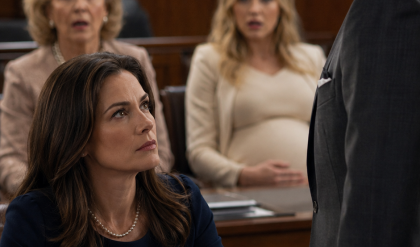
Tom Miller smiled when Rachel signed the divorce papers without asking for a penny.
He thought he had escaped a plain wife, a quiet marriage, and a future too small for his ambition.
By the time he discovered who she really was, the woman he discarded had already locked him out of the fortune he never deserved.
PART 1 — THE WOMAN HE THOUGHT WAS WORTH NOTHING
The dashboard clock in Tom Miller’s Mercedes-Benz S-Class glowed 7:45 p.m. as he turned into the driveway of his two-story colonial in Greenwich, Connecticut. The house looked respectable beneath the autumn dusk, with warm light in the windows and trimmed hedges lining the brick path. To anyone passing by, it looked like success.
To Tom, it looked like a cage.
He sat for a moment with both hands on the leather steering wheel, staring at the front door as if the house had personally offended him. At thirty-four, Tom believed he was entering the best chapter of his life. Vice president of sales at a rising tech firm. Gym-built shoulders. A closet full of tailored shirts. A name that appeared in quarterly newsletters and investor decks.
Inside, Rachel was waiting.
The thought irritated him before he even stepped out of the car.
Rachel Miller, his wife of six years, was everything he had once claimed to want. Gentle. Steady. Loyal. A pediatric nurse with tired blue eyes, soft brown hair, and a habit of leaving handwritten grocery lists on the fridge. She baked bread on Sundays, remembered every neighbor’s birthday, and cried quietly during old movies.
Once, Tom had called that tenderness rare.
Now he called it boring.
He grabbed his briefcase from the passenger seat and walked toward the house, the October air sharp against his face. His phone buzzed before he reached the porch. Jessica.
Did you do it yet?
Tom smiled despite himself. Jessica Hale was twenty-four, bright, restless, and expensive in ways that made Tom feel important. She worked in marketing at his firm, wore perfume that lingered in conference rooms, and laughed at his jokes like he was the most fascinating man alive. Compared to Rachel’s quiet kindness, Jessica felt like champagne poured over fire.
Tom texted back.
Tonight.
Then he slipped the phone into his pocket and opened the front door.
The smell of pot roast met him immediately.
He hated how familiar it was.
“Tom?” Rachel called from the kitchen. “You’re late. I kept dinner warm, but it may be a little dry now.”
He paused in the hallway, loosening his tie.
That was Rachel. No accusation. No anger. Just a small apology hidden inside a sentence where she had done nothing wrong.
He walked into the kitchen. Rachel stood by the stove in a navy cardigan and faded jeans, scraping carrots into a serving bowl. Her hair was pinned into a loose bun, and a strand had fallen against her cheek. She looked tired but peaceful, the way people looked when they had spent the day helping children survive fevers and fear.
Tom felt nothing but impatience.
“I had a meeting,” he said.
She looked at him. “You could have texted.”
“I was busy.”
“I know.” She placed the serving spoon down carefully. “I just worry when you’re late.”
He opened the fridge, took out a sparkling water, and twisted the cap with unnecessary force. “Rachel, we need to talk.”
Her hand stilled.
For months, the marriage had been dying in fragments. Missed dinners. Cold beds. Tom’s shirts smelling faintly of Jessica’s perfume. Rachel had noticed all of it. She noticed more than Tom believed, but she had been waiting for him to tell the truth because she still wanted to think better of him.
Now, standing in the kitchen they had painted together four years earlier, she understood waiting had been foolish.
“What is it?” she asked quietly.
Tom leaned against the island like a man beginning a presentation. “I can’t do this anymore.”
Rachel did not move. “Do what?”
“This.” He gestured around the room. “This life. This house. This routine. I feel like I’m suffocating.”
The refrigerator hummed. Rain began tapping softly against the kitchen windows.
Rachel looked at the dinner cooling on the stove, then back at him. “You mean our marriage.”
“Yes.” He exhaled as though she had forced him into honesty. “I’ve changed. My world is different now. My career is moving fast. I’m meeting people, going places, building something bigger. And you…”
He stopped, pretending he was being merciful.
Rachel finished for him. “And I don’t fit.”
He gave a small shrug. “You said it, not me.”
Her face remained calm, but one hand slid to the edge of the counter. She gripped it lightly, as if the room had tilted beneath her.
“There’s someone else,” she said.
Tom blinked. He had expected tears first. Denial. Maybe a trembling question. Instead, she spoke like a woman who had already read the last page and was simply confirming the title.
“Yes,” he said. “I didn’t want to lie.”
Rachel almost smiled at that. Not because it was funny, but because the arrogance of men sometimes arrived dressed as honesty. He had lied for months. Now that the lie served him better as truth, he wanted credit for speaking it aloud.
“Jessica?” she asked.
Tom’s jaw tightened. “You know about her?”
“I know enough.”
“She understands me,” Tom said quickly. “She understands the life I’m trying to build.”
Rachel nodded once, slowly. “And I don’t.”
“You never wanted more,” he said, and now the resentment came spilling out because he had rehearsed it too many times to stop. “You were always content with small things. Coupon apps. Hospital stories. Bread recipes. That little Honda you refuse to replace. I’m tired of pretending that’s enough for me.”
Rachel looked at him for a long moment.
When they married, Tom had not owned the Mercedes. He had driven a used sedan with a cracked mirror. Rachel had packed sandwiches for his early sales calls and stayed awake beside him while he practiced pitches at midnight. She had celebrated every raise like a miracle. She had believed in him before his confidence became cruelty.
But she did not remind him of that.
She had learned something from old money long before Tom ever understood money at all: people revealed themselves most clearly when they thought they had power.
“You want a divorce,” she said.
“Yes.”
“Okay.”
Tom stared at her. “Okay?”
“If you’re unhappy, I can’t make you stay.”
His irritation flared. “That’s it? Six years of marriage and you say okay?”
“What would you prefer?” she asked gently. “That I beg?”
The question cut too close. That was exactly what he had wanted. He had wanted proof that he was worth fighting for. He had wanted Rachel to collapse so he could feel large beside her grief.
Instead, she stood in front of him with quiet eyes and steady hands, and somehow it made him feel smaller.
“I’ve already spoken to a lawyer,” he said, reaching for authority. “Richard Sterling.”
Rachel’s expression shifted almost imperceptibly. “The divorce attorney?”
“The best in New York,” Tom said. “I want this handled cleanly. The house is in my name. The investments came from my salary. I’m not going to be punished because you decided to stay a nurse.”
Her eyes lowered briefly.
Not because of the insult.
Because Tom had no idea how little his salary mattered.
“I see,” she said.
“I’ll be fair,” he continued. “But I won’t be fleeced. You have your nursing income. I have responsibilities. Jessica’s lease ends soon, and I want the house renovated before the holidays.”
Rachel absorbed the sentence in silence.
The cruelty was not accidental. He wanted her to picture another woman walking through their bedroom, choosing paint colors, replacing curtains, laughing where Rachel had cried quietly at three in the morning.
“Of course,” Rachel said.
Tom frowned. “Of course what?”
“Send the papers. I’ll review them.”
“You’ll need a lawyer.”
“I have one.”
He laughed. “You do?”
“A family contact. Arthur Abernathy.”
“Sounds like he practices out of a library basement.”
Rachel looked at him then, and for one brief second something passed over her face. Not anger. Not embarrassment.
Pity.
Tom hated it.
“Fine,” he snapped. “Use whoever you want. Just don’t drag this out.”
“I won’t.”
She untied her apron and folded it neatly on the counter. The gesture was so calm that it made the moment feel more final than shouting ever could have.
“I’ll stay at a hotel tonight,” she said.
Tom crossed his arms. “That’s dramatic.”
“No,” Rachel replied softly. “It’s clean.”
She walked upstairs. Ten minutes later, she returned with one duffel bag. She had changed into a wool coat, and her wedding ring still glinted on her finger beneath the hall light. Tom expected her to look broken.
She looked sad.
There was a difference.
At the door, she paused.
“For what it’s worth,” she said, “I did love you, Tom. Not what you had. Not what you were becoming. Just you.”
He rolled his eyes because tenderness had become unbearable to him. “Don’t make this sentimental.”
She nodded, as if he had answered a question she had stopped asking years ago.
Then she left.
The door closed softly behind her.
Tom stood in the kitchen, surrounded by cooling food and the life he had just dismissed as beneath him. For a moment, the silence felt strange. Empty.
Then he took out his phone and texted Jessica.
It’s done. She left. Easier than I thought. Champagne tonight?
Jessica replied with a string of flame emojis and a kiss.
Tom smiled.
He had no idea Rachel Miller was not driving to a cheap hotel to cry over him.
She was sitting in the back of a black town car three blocks away, her duffel beside her, while Arthur Abernathy’s voice came through a secure line.
“Is it done, Miss Vanderhoven?”
Rachel closed her eyes.
The name felt strange after six years of hiding it.
“Yes,” she said. “He asked for the divorce.”
“And did he mention finances?”
“He wants to keep the house, the investments, the car. He believes I’m going to fight him for half.”
A pause.
“Will you?”
Rachel looked out the rain-streaked window at the warm little house she had tried to make into a home. Through the glass, she could see Tom moving around the kitchen, already on his phone, already celebrating.
“No,” she said. “I want him to keep everything he thinks matters.”
Arthur was silent for a moment. Then his voice softened. “Are you certain?”
Rachel touched the simple gold band on her finger.
Her grandfather’s words came back to her from years ago, spoken in a palace-like study overlooking Lake Como: A fortune can protect you from poverty, Rachel, but it cannot protect you from being loved badly.
She had begged for the chance to live without the Vanderhoven name. She had wanted to know whether anyone could love her when she looked ordinary. When she clipped coupons. When she wore scrubs. When she drove an old Honda and came home smelling faintly of antiseptic and baby lotion.
For six years, she had believed Tom was that person.
Tonight, he had answered her.
“I’m certain,” Rachel said.
Arthur exhaled. “Then we will make the separation absolute.”
“Good.”
“And after?”
Rachel looked down at her hands.
The diamond dynasty bracelet in her purse, the one she had not worn since her wedding day, felt heavier than any ring.
“After,” she said, “I go home.”
Three weeks later, Tom Miller entered the conference room of Sterling Finch & Associates with the confidence of a man who believed the battle had already been won.
The office was all glass, steel, and intimidation. Manhattan lay beyond the windows in a gray afternoon haze, towers stacked like trophies under the autumn sky. Richard Sterling sat at Tom’s right, silver-haired, tanned, and sharp as a blade. Across the table sat Rachel.
She wore a simple gray suit. No jewelry except a small watch. Her hair was tied low. She looked composed, almost plain, and Tom felt a familiar flicker of superiority.
Beside her sat Arthur Abernathy.
Tom had expected a weak old man, and that was exactly what Arthur allowed him to see. Tweed jacket. Thick glasses. A leather briefcase that looked older than the building. He fumbled with the clasp long enough for Tom to exchange an amused glance with Sterling.
“Gentlemen,” Sterling began, his voice rich with theatrical authority, “we are here to expedite the dissolution of the marriage between Mr. Thomas Miller and Mrs. Rachel Miller.”
“Jenkins,” Rachel said quietly.
Sterling paused. “Excuse me?”
“I would like my maiden name restored.”
Tom smirked. “Already eager to erase me?”
Rachel looked at him. “No. Just correcting the record.”
Sterling cleared his throat and continued. “As outlined in our proposal, Mr. Miller is prepared to offer a lump sum of twenty-five thousand dollars in exchange for Mrs. Miller waiving claim to the marital residence and associated equity.”
Arthur adjusted his glasses. “I see.”
The offer was insulting. Everyone at the table knew it. The house had more than two hundred thousand dollars in equity. But Tom had instructed Sterling to begin low because he believed Rachel would panic. He knew she avoided confrontation. He knew she hated legal language. He knew she would be scared.
Rachel did not look scared.
“Additionally,” Sterling said, “Mr. Miller contests spousal support. Mrs. Miller is gainfully employed and capable of maintaining herself.”
Arthur leaned toward Rachel and murmured something.
Rachel nodded.
“My client is not interested in spousal support,” Arthur said.
Sterling’s smile faltered.
Tom blinked. “What?”
Arthur looked across the table. “Nor is she interested in the house.”
Tom sat back. “You don’t want the house?”
“No,” Rachel said.
“It’s worth more than anything you own.”
“Then enjoy it.”
The room went quiet.
Sterling’s eyes narrowed. His instincts, sharpened by decades of divorce warfare, sensed something unusual. “Mrs. Miller, I must clarify. You understand that you may be entitled to a portion of the marital equity.”
“I understand.”
“And you decline?”
“Yes.”
Tom laughed under his breath. “This is incredible.”
Rachel did not react.
Sterling glanced at Arthur. “And retirement accounts? Mr. Miller’s 401(k), accumulated during the marriage—”
“My client waives claim,” Arthur said.
“Investments?”
“Waived.”
“Vehicle use?”
“Waived.”
Tom leaned forward, unable to contain himself. “What do you want, Rachel? Don’t play the saint. There has to be something.”
Rachel folded her hands.
“I want three things. My maiden name restored immediately. The divorce finalized as quickly as legally possible. And a mutual clause stating neither party may pursue assets discovered, acquired, inherited, transferred, or disclosed after the date of separation.”
Sterling looked at Arthur again.
This time, there was no amusement in his expression.
“That clause protects Mr. Miller as well,” Arthur said mildly.
“It does,” Sterling replied slowly. “But it is unusually broad.”
“Mr. Miller requested a clean break,” Rachel said. “I am giving him one.”
Tom leaned back, grinning. “Smartest thing you’ve said all year.”
Arthur’s eyes flickered once.
Rachel reached for the pen.
Sterling stopped her. “Before you sign, Mrs. Miller, I am obligated, though I do not represent you, to confirm that you understand the permanent nature of this waiver.”
“I do.”
“You will have no claim against Mr. Miller’s assets after signing.”
“I understand.”
“And he will have no claim against yours.”
Rachel’s hand hovered above the signature line.
For the first time that day, she smiled.
“Exactly.”
She signed.
Her handwriting was clean, elegant, and steady.
Tom watched the ink dry and felt triumph expand in his chest. It was almost too easy. Six years, and she had walked away from everything for the privilege of leaving him.
He believed it proved she was weak.
It never occurred to him that she had just purchased her freedom at the cost of things she had never valued.
“One more thing,” Tom said.
Rachel looked up.
“The Mercedes key. It’s in my name.”
She reached into her purse, placed the key fob on the table, and slid it toward him.
“I removed my things from the glove box.”
Tom picked it up. “Good.”
He waited for her to break. A tremble. A tear. Something.
Instead, Rachel stood.
“Goodbye, Tom.”
He smirked. “Good luck with the cheap apartment.”
She looked at him one final time.
“I hope you find the life you think you deserve.”
Then she walked out with Arthur Abernathy beside her.
The door closed.
Tom burst out laughing. “Did you see that? Total surrender.”
Sterling did not laugh.
“What?” Tom asked.
The lawyer stared at the signed documents. “In thirty years, I have rarely seen someone abandon marital assets so calmly.”
“She didn’t abandon anything,” Tom said. “She just knew she couldn’t win.”
Sterling’s mouth tightened. “Usually, when someone leaves the table that quickly, it is because they have a better table waiting elsewhere.”
Tom waved him off.
“Rachel? Please. She’s going back to hospital shifts and grocery coupons.”
Downstairs, Rachel stepped onto the sidewalk. Manhattan wind pulled at her coat, but she did not shiver. Arthur opened his briefcase with no clumsiness now and placed the signed copies into a protected folder.
“The waiver is complete,” he said. “He cannot touch anything tied to your trust. Not the liquid accounts. Not the family foundation. Not the inheritance transfer.”
Rachel closed her eyes briefly.
“Then it’s done.”
Arthur studied her face. “You could have punished him.”
“No,” Rachel said. “I could have bought him. That would have been worse.”
A black Rolls-Royce Phantom pulled to the curb.
A uniformed driver stepped out and opened the rear door.
“To Teterboro, Miss Vanderhoven?” he asked.
Rachel looked once at the skyscraper above them. Somewhere inside, Tom was probably congratulating himself over a house, a car, and a bank account that would not have paid for one month of security at her grandfather’s estate.
“Yes,” she said. “To the airfield.”
Arthur entered beside her.
As the car pulled away, Rachel slipped her wedding ring from her finger and placed it into a small velvet pouch.
“He thinks he won,” she murmured.
Arthur looked straight ahead.
“He won pennies,” he said. “And lost the bank.”
Rachel Jenkins disappeared that afternoon.
Rachel Vanderhoven returned before sunrise over Lake Como.
And Tom Miller’s victory had already started rotting from the inside.
PART 2 — THE FORTUNE HE COULD NO LONGER TOUCH
Three months later, Tom Miller’s house no longer smelled like pot roast, fresh bread, or Rachel’s lavender hand soap.
It smelled like drywall dust, wet paint, and credit card debt.
The kitchen had been ripped apart first because Jessica had declared it “tragically suburban.” The warm maple cabinets Rachel had polished every Saturday were stacked in the garage like discarded bones. The granite countertops had been smashed out to make room for Calacatta gold marble that Jessica had seen in a celebrity home tour.
The marble was still sitting in crates.
Unpaid.
Tom sat at the remains of the kitchen island with a lukewarm coffee and a headache that had started before dawn. A contractor’s radio played classic rock somewhere behind a plastic dust barrier. The sound of a circular saw screamed through the house, then stopped abruptly.
“Babe?”
Jessica’s voice came from the hallway.
Tom closed his eyes.
She appeared in the kitchen wearing a silk robe, oversized sunglasses pushed into her blonde hair, and an expression of theatrical suffering.
“The bathroom tile is stuck in customs,” she announced.
Tom stared at her. “What?”
“The Italian tile. For the primary bathroom. They need five thousand dollars to expedite shipping.”
He rubbed his forehead. “Jessica, we are already forty percent over budget.”
She blinked as if he had spoken a foreign language. “So?”
“So maybe we wait.”
“Wait?” Her mouth tightened. “Tom, the holiday party is next month.”
“We don’t have to host a holiday party.”
“We absolutely have to host a holiday party. Everyone knows we’re renovating. Everyone expects to see the house.”
Tom looked around at exposed wiring and unfinished flooring. “There may not be a house to see.”
Jessica crossed her arms. “Don’t be dramatic.”
“Don’t be expensive.”
Her face changed instantly. “Excuse me?”
“I didn’t mean—”
“Yes, you did.” She laughed sharply. “You know what? You’re starting to sound like her.”
Tom’s jaw tightened. “Like Rachel?”
“Yes. Always worried about money. Always choosing the practical option. Always making everything feel small.”
“She kept this place running,” Tom snapped before he could stop himself.
Jessica stared at him.
The contractor in the next room went silent.
Tom looked away.
Jessica’s voice lowered. “Maybe you should have stayed with your boring little nurse if you miss her budgeting so much.”
“I don’t miss Rachel.”
“Good,” Jessica said. “Then pay for the tile.”
She walked out before he could answer.
Tom sat alone in the destroyed kitchen, feeling the first sharp edge of something he did not want to name.
Regret.
Not love. Not yet. His ego would not permit that. But inconvenience had begun to open doors memory could walk through.
Rachel had paid bills quietly. Rachel had known when insurance renewals were due. Rachel had made dinner out of whatever was left in the fridge during tight months before his promotions. Rachel had remembered the plumber’s name, the property tax deadline, the brand of coffee he liked, the exact medicine he needed when stress migraines knocked him down.
Jessica remembered what champagne she preferred.
His phone buzzed.
A message from the contractor.
Card declined on marble balance. Please advise.
Another buzz.
Jessica.
Fix this before I get back from the spa.
Tom opened his banking app.
The numbers looked worse every week. Legal fees. Renovation deposits. New furniture. Jessica’s wardrobe. Restaurants. Gifts. The life he had once imagined as proof of success was bleeding him dry.
He had kept the house.
He had kept the car.
He had kept the investments.
And somehow he felt poorer than he had ever been.
At work, things were not much better. His sales figures had slipped. His energy had dulled. The confidence that once made him magnetic in presentations had become brittle, too loud, too forced. People still laughed at his jokes, but not as quickly.
He told himself it was temporary.
Once the renovation was finished, he would feel powerful again.
Once Jessica settled down, he would feel wanted again.
Once the bonus arrived, he would breathe again.
But the bonus depended on the quarterly strategy meeting, and the strategy meeting depended on Tom being brilliant.
On the morning everything changed, Tom arrived at his company’s Manhattan office in a navy suit and a red tie Jessica had chosen because she said it made him look “aggressive.” He carried a leather portfolio and two espressos in his stomach.
The boardroom was already full.
Usually, the executives would be on laptops, pretending not to watch each other. That morning, several of them were gathered at the far end of the table around Gavin Pierce, Tom’s rival for the senior VP position.
Gavin held a glossy magazine open.
“No way,” one executive murmured.
“Incredible,” said another.
“Imagine not knowing.”
Tom set his portfolio down harder than necessary.
“Morning,” he said. “What’s the scandal?”
Gavin looked up.
The expression on his face made Tom uneasy.
It was not surprise. It was delight sharpened into a weapon.
“You haven’t seen it?” Gavin asked.
“Seen what?”
Gavin slid the magazine down the polished table. It spun once and stopped in front of Tom.
Vanity Fair: Heirs & Empires Special Edition.
Tom frowned. “I don’t read society gossip.”
“You should start,” Gavin said. “Page forty-two.”
A few people looked down to hide smiles.
Tom flipped through the pages with irritation.
Then he stopped breathing.
The photograph took up an entire page.
A woman stood in what looked like a European palace, framed by marble columns and lake light. She wore a midnight-blue gown that made her eyes look almost silver. Sapphires and diamonds rested at her throat. Her hair, once always tied back in practical knots, fell in elegant waves over one shoulder.
It was Rachel.
Not Rachel the nurse. Not Rachel in cardigans, flour on her cheek, laughing softly over Sunday bread.
This Rachel looked like she had been born from old portraits and private vaults.
The headline struck him harder than any slap.
THE SILENT HEIRESS RETURNS: RACHEL VANDERHOVEN TAKES HER SEAT AT THE HEAD OF EUROPE’S OLDEST BANKING DYNASTY
Tom’s hands tightened around the magazine.
He read the first paragraph once.
Then again.
Then a third time, because his mind refused to accept the shape of the words.
For six years, Rachel Vanderhoven lived quietly in the United States under her mother’s maiden name, working as a pediatric nurse in Connecticut while distancing herself from the immense power of the Vanderhoven banking empire. Following the death of her grandfather, Baron Friedrich Vanderhoven, she has returned to Europe as sole heir to a family fortune estimated at more than twelve billion dollars. Her personal philanthropic trust alone is valued at one hundred million dollars.
The room tilted.
Tom sat down because his knees had forgotten their purpose.
“Vanderhoven,” he whispered.
Marcus Thorne, the CEO, spoke from the head of the table. “The Vanderhovens financed our Series C expansion.”
Someone else added, “They underwrote half the European tech sector after the crash.”
Gavin leaned back. “Your ex-wife is not just rich, Tom. She is old-world, private-bank, governments-answer-the-phone rich.”
Tom shook his head. “No. She was a nurse.”
“She was also an heiress,” Gavin said. “Apparently a very quiet one.”
Tom kept reading.
There was a quote from Rachel.
“I wanted to know whether I could live a life of service without the weight of my name. I wanted to know if I could be loved without the fortune attached. That chapter has ended. Now I intend to use what I inherited with purpose.”
Loved without the fortune attached.
Tom felt the words crawl under his skin.
The boardroom was silent now, but it was not merciful silence. It was hungry.
They were all watching him understand.
Arthur Abernathy.
The old man in tweed.
Tom grabbed his phone and searched with trembling fingers.
Arthur Abernathy lawyer Vanderhoven.
The first result loaded.
Sir Arthur Abernathy, Senior Counsel to the Vanderhoven Trust, international asset protection specialist, known among European financial circles as “The Iron Gate.”
Tom heard his own voice from three months earlier.
Sounds like he practices out of a library basement.
He swallowed hard.
Gavin’s voice came softly, almost kindly, which made it worse.
“You made her sign a waiver, didn’t you?”
Tom stared at him.
“I heard you bragging,” Gavin continued. “You said she walked away with nothing. You said you kept the house, the car, the retirement accounts.”
A few executives looked away now.
Not out of pity.
Out of secondhand embarrassment.
Tom’s mouth opened, but no sound came out.
Gavin tapped the magazine. “You made a billionaire heiress promise not to touch your 401(k).”
Someone coughed to cover a laugh.
Marcus Thorne did not laugh.
He looked disgusted.
“You divorced that woman?” he asked.
Tom’s face burned. “I didn’t know.”
“That is painfully clear.”
“She never told me.”
Marcus leaned back. “That may have been the test.”
The word hit him.
Test.
Memories erupted with new meanings.
Rachel turning away when he mocked her Honda. Rachel quietly declining expensive jewelry he offered only when he wanted to impress people. Rachel sitting through his complaints about their “average” life while knowing she could buy every house on their street in cash. Rachel asking once, years ago, “Would you still want this life if no one else admired it?”
He had laughed.
He had said, “What’s the point of winning if no one sees it?”
She had gone quiet after that.
Tom stared at the photo again.
The pity in Rachel’s eyes at the divorce table now made sense.
She had not pitied herself.
She had pitied him.
His phone buzzed against the table.
Jessica.
The card declined again. This is humiliating. Fix it.
Tom looked at the message, then at the magazine.
For one insane second, he wanted to scream.
Instead, he placed the phone face down.
Marcus cleared his throat. “Mr. Miller, unless your personal revelation is complete, we have a strategy meeting.”
Tom looked up.
Everyone was still staring.
He opened his laptop. His presentation blurred on the screen. Charts. Projections. Sales funnels. Numbers he had worshiped when he believed they made him important.
Now every number looked tiny.
He began to speak, but his voice cracked.
“Q4 pipeline is…”
He stopped.
Gavin’s eyes glittered.
Tom tried again.
For the next forty minutes, he delivered the worst presentation of his career while Rachel Vanderhoven’s face stared up from the glossy magazine beside his laptop like a verdict.
By the end of the week, the story had escaped Vanity Fair and become internet bloodsport.
Man Divorces Nurse Wife, Discovers She’s Banking Heiress.
He Kept the House—She Kept the Dynasty.
The Most Expensive Divorce Mistake in Greenwich.
Comment sections turned him into a cautionary tale before lunch.
At home, Jessica was not sympathetic.
“She deceived you,” Jessica snapped, pacing across the unfinished living room in heels that clicked against plywood. “She lied to you for years.”
“She didn’t lie,” Tom said numbly. “She used her mother’s name.”
“She hid billions.”
“She didn’t owe me billions.”
Jessica stopped and stared at him as if he had betrayed her. “Do you hear yourself? You were married. If you had handled this correctly, we could have been set for life.”
“We?”
“Yes, we,” she snapped. “Do you think I signed up for this disaster? The cards are maxed out. The house looks like a construction site. Your company is treating you like a joke, and now I find out your ex-wife is worth more than everyone we know combined.”
Tom’s eyes narrowed. “You’re angry because I lost access to her money.”
Jessica laughed without humor. “I’m angry because you were too stupid to know what you had.”
The words entered him like a blade.
Because he had already been saying them to himself.
Jessica left two weeks later.
Not dramatically. Not with tears.
She packed designer bags, loaded them into a rideshare, and sent one final text from the back seat.
I can’t build a luxury life with a man who can’t recognize value. Don’t call me.
Tom stood in the half-finished foyer reading the message while rainwater dripped through a leak near the new skylight.
For the first time since Rachel left, the house was silent again.
But Rachel’s silence had once been warm.
This silence was punishment.
Tom lasted another month before he convinced himself he needed to see her.
At first, he called. The number had been disconnected.
Then he emailed. No response.
Then he sent a letter to the hospital where she had worked. It returned unopened.
Finally, desperation became a plan.
He liquidated what remained of his 401(k), took out a high-interest loan against his shrinking home equity, and booked a first-class ticket to Milan because some online article said Rachel was currently staying at her family’s estate on Lake Como.
The flight felt unreal.
Tom drank too much bourbon and rehearsed apologies over the Atlantic. In his mind, Rachel would see him at the gate, remember their marriage, and soften. He would tell her that Jessica meant nothing. That the divorce had been confusion. That he had been ambitious, scared, foolish.
He would not mention money first.
He practiced that part carefully.
The Vanderhoven estate appeared at the end of a winding road bordered by cypress trees and stone walls older than his country. Villa Vanderhoven rose above the lake like a private kingdom, all pale limestone, iron balconies, and terraces spilling with flowers. The water below glittered under late afternoon sun.
Tom pulled his rented Ferrari to the gate.
The intercom clicked.
“Yes?”
“I’m here to see Rachel Vanderhoven,” Tom said, forcing confidence. “Tom Miller. Her husband.”
A pause.
“Ex-husband.”
Tom’s jaw tightened. “Please tell her I’m here. It’s urgent.”
The gate opened after a long silence.
Hope surged.
He drove up the gravel path, parked beneath a fountain carved with sea gods, and stepped out adjusting his jacket.
The front doors opened.
Arthur Abernathy appeared.
Not in tweed now. In a perfectly tailored dark suit, standing beneath the villa archway with the stillness of a man who had guarded empires longer than Tom had known how to pronounce the word.
“Mr. Miller,” Arthur said. “You are very far from Connecticut.”
“I need to speak with Rachel.”
“Miss Vanderhoven is not receiving visitors.”
“I was her husband.”
Arthur’s eyes hardened. “And then you made yourself a stranger.”
Tom stepped forward. “I made a mistake.”
“You made several.”
“I love her.”
Arthur descended one step. “No. You regret the loss.”
“You don’t know that.”
“I know enough. I was present when she signed her freedom away from you. I saw your face when you believed she was leaving with nothing. You did not look like a grieving husband, Mr. Miller. You looked like a man who had just won an auction.”
Tom’s face flushed. “I was angry.”
“You were greedy.”
“I didn’t know who she was.”
“That is the only honest thing you have said.”
Tom looked past him toward the villa windows. “Rachel! Rachel, please!”
A second-floor balcony door opened.
Rachel stepped outside.
She wore white linen, her hair loose in the lake breeze. No diamonds. No dramatic gown. No performance. She looked more like the woman in the kitchen than the woman in Vanity Fair, and somehow that hurt more.
Because she was both.
Because she had always been both.
“Rachel,” Tom called, his voice cracking. “Please. Just five minutes.”
She looked down at him.
For a heartbeat, neither spoke.
Then she said, “Arthur, please ask Mr. Miller to leave.”
“Rachel, I’m sorry!” Tom shouted. “I was stupid. I was blind. I didn’t appreciate you.”
“No,” she said softly. “You didn’t.”
“I love you.”
She looked at him for a long moment.
“No, Tom. You loved being admired. You loved being served. You loved being chosen by someone you thought was beneath you because it made you feel powerful.”
His throat closed.
“That’s not fair.”
“It is the first fair thing I have said to you in years.”
“I lost everything,” he whispered.
Something flickered in her eyes. Not tenderness. Recognition.
“I know.”
“Then help me. Please. I’m drowning.”
Rachel’s face changed then.
The sadness remained, but it was no longer open to him.
“I spent years drowning beside you while you complained the water was not glamorous enough.”
Tom flinched.
“You have my sympathy,” Rachel continued. “But not my rescue.”
“Rachel—”
“You asked for a clean break. I gave it to you.”
She stepped back.
“Goodbye, Tom.”
Then she closed the balcony doors.
The curtains followed.
Tom stared at the empty balcony until security moved closer.
Arthur’s voice came from beside him, cold and final.
“Go home, Mr. Miller. There is nothing for you here.”
Tom drove away shaking.
At the bottom of the hill, he pulled to the side of the road and vomited into the grass beside the rented Ferrari.
For the first time, he understood the full architecture of his loss.
He had not lost Rachel when she became rich.
He had lost her in a Connecticut kitchen, while pot roast cooled on the stove and she gave him one last chance to be decent.
PART 3 — THE LIFE HE CHOSE WITHOUT HER
When Tom returned to Greenwich, Jessica was gone, the house was dark, and an unpaid contractor had taped an invoice to the front door.
He stood in the entryway surrounded by half-installed lighting, bare drywall, and the echo of his own breathing.
The note Jessica left was written on the back of a marble supplier bill.
Tom, I can’t live in a construction site with a man who has no future. I’m going back to the city. Don’t make this embarrassing. —J
He laughed once.
It sounded broken.
Then he sat on the plywood floor where Rachel’s favorite rug used to be and stayed there until sunrise.
The collapse that followed was not dramatic at first. It arrived in envelopes, declined charges, awkward phone calls, and quiet professional distance.
The Mercedes was repossessed in the company parking lot on a Thursday morning. Gavin watched from the seventh-floor window with a coffee cup in hand. Tom pretended not to see him.
His credit score fell.
The contractor sued.
The home equity line reached its limit.
At work, his reputation became a joke disguised as concern. Clients hesitated. Colleagues whispered. No one wanted the judgment of a man who had slept beside a billion-dollar fortune for six years and traded it for imported bathroom tile.
Marcus Thorne called him in on a rainy Friday afternoon.
Tom knew before he sat down.
“This is not working,” Marcus said.
Tom’s hands tightened on his knees. “My pipeline will recover.”
“It is not just the pipeline.”
“Marcus—”
“Your focus is gone. Your judgment is questioned. And frankly, Tom, clients have started making jokes.”
Tom stared at him. “Jokes?”
Marcus removed his glasses. “If you could not recognize value in your own home, why should they trust you to recognize value in theirs?”
The sentence was brutal because it was clean.
No insult could compete with accuracy.
Tom was escorted out with one cardboard box.
Inside were two framed sales awards, a half-used bottle of cologne Jessica had bought him, and a photograph from a company holiday party where Rachel stood quietly beside him in a dark green dress.
He had cropped her out when he posted it.
Now he stared at the full photo until the security guard coughed behind him.
The house went next.
Foreclosure did not feel like a single event. It felt like being erased by paperwork. The home he had fought to keep became a line item in a bank file. The unfinished marble was sold for pennies. The garden Rachel had tended turned brown and wild.
On the day he left, Tom walked through each room slowly.
In the kitchen, he remembered Rachel kneading bread by the window.
In the bedroom, he remembered her folding laundry while he ignored her from the doorway.
In the dining room, he remembered telling Jessica over the phone that Rachel had “no fight in her.”
He had mistaken dignity for weakness because he had never possessed enough of it to recognize it in someone else.
He moved into a one-bedroom apartment in Bridgeport with thin walls, old carpet, and a radiator that hissed like it hated him.
The first night, he ate takeout noodles from a paper carton and listened to his upstairs neighbor argue for two hours. Rain struck the window in hard silver lines.
He thought of Lake Como.
He thought of Rachel’s voice.
You have my sympathy. But not my rescue.
For months, he hated her for that sentence.
Then one morning, while shaving under flickering bathroom light, he finally admitted the truth.
She was right.
Five years passed.
Tom turned forty in an apartment where the wallpaper peeled near the window. He worked as a floor manager at a used car dealership off I-95, wearing cheap dress shirts and smiling at people who did not trust him. His hairline had thinned. His jaw softened. The sharp ambition that once filled him had curdled into exhaustion.
He learned to stretch groceries.
He learned which gas station sold coffee cheapest.
He learned the humiliation of being ordinary after spending his life despising ordinary people.
One winter evening, rain fell over Bridgeport in cold sheets. Tom sat at his laminate kitchen table, eating a microwave dinner that had overheated at the edges and stayed frozen in the center. The television played a global news channel mostly for noise.
Then a familiar name cut through the room.
“Live from Vienna, where the wedding of Rachel Vanderhoven, banking heiress and philanthropist, has drawn royalty, heads of state, and global business leaders…”
Tom froze.
The screen showed a cathedral glowing beneath thousands of white roses. Crowds filled the street. Cameras flashed like lightning.
Then Rachel appeared.
She stepped from a vintage Rolls-Royce in a lace gown that looked made of light. She was older than when he had last seen her, but somehow more luminous. Not because of diamonds. Not because of the cathedral. Because peace had settled into her face.
Beside her stood Julian Devereaux, the architect the newspapers had linked to her for years. Tall, composed, silver at the temples. He took Rachel’s hand like it was sacred.
Tom lowered his fork.
The reporter continued, “Known for transforming the Vanderhoven Foundation, Rachel has funded children’s hospitals, rural clinics, and emergency medical programs across Europe and North America. In a rare interview, she described her greatest turning point as ‘leaving a life where I was tolerated and choosing one where I could finally be useful without disappearing.’”
Tom closed his eyes.
He could see her in the kitchen again.
The pot roast. The apron. The quiet hands.
He had thought she was small because she did not perform power.
He had thought she was boring because she did not advertise depth.
He had thought she was weak because she refused to fight him over scraps.
On the screen, Rachel paused at the cathedral steps and looked toward the crowd. The camera caught her smile.
It was the smile he had wanted once and ignored when he had it.
A knock came at his door.
Tom muted the television.
His neighbor Mike leaned in. “Hey, man. Sorry. Any chance you’ve got twenty bucks until Friday?”
Tom stared at him for a moment.
Then he reached into his wallet and took out the only twenty-dollar bill he had.
“Here.”
Mike grinned. “You’re a lifesaver.”
He glanced at the television. “Who’s that?”
Tom looked back.
Rachel was walking into the cathedral now, her hand resting in Julian’s.
“Someone I used to know,” he said.
Mike left.
Tom closed the door and turned off the TV.
The apartment fell silent.
For years, Tom had told himself Rachel’s punishment was too severe. That no one deserved to lose everything over one bad decision.
But the older he got, the more he understood.
It had not been one bad decision.
It had been every morning he did not kiss her. Every dinner he mocked. Every sacrifice he ignored. Every kindness he consumed without gratitude. Every moment he measured her by what she did not display instead of what she quietly gave.
He had not been punished by Rachel.
He had been left alone with the life he chose.
That was worse.
Across the ocean, Rachel Vanderhoven married beneath cathedral bells and did not think of Tom at all until much later that evening, when she stood on a balcony overlooking Vienna with her new husband’s coat around her shoulders.
Julian followed her gaze. “Are you all right?”
Rachel smiled. “Yes.”
“Thinking of something?”
“Someone I used to be.”
He touched her hand gently, waiting. He never forced her to speak. That was one of the first things she had loved about him.
“I spent years pretending ordinary meant safe,” Rachel said. “Then I spent years learning that money does not make you safe either. Only truth does.”
Julian nodded. “And are you safe now?”
Rachel looked through the open doors at the music, the flowers, the guests, the life she had rebuilt not from revenge, but from return.
Then she looked at the man who had never once asked her to become smaller so he could feel taller.
“Yes,” she said. “I am.”
Years later, people still told the story of Tom Miller, the man who divorced a quiet nurse and learned too late that she had been the hidden heir to a banking dynasty. They told it as karma. As scandal. As the most expensive mistake a man could make.
But Rachel never told it that way.
When young women asked her how she had survived humiliation, betrayal, and being underestimated, she did not talk about money first.
She talked about self-respect.
“A woman does not become valuable when someone discovers her fortune,” she said at a foundation gala years later. “She was valuable when no one applauded. She was valuable in the kitchen, in the hospital corridor, in the quiet years, in the moments when people mistook her patience for permission. The world may learn your worth late. Make sure you do not.”
The room stood for her.
Rachel accepted the applause with grace.
Not because she needed it.
Because she had finally learned how to receive what she had once begged for from the wrong man.
Recognition.
And somewhere in Bridgeport, Tom Miller sat alone in a used-car dealership office, watching rain slide down a window, hearing the echo of a lesson he had paid for with everything.
Real wealth is not loud.
Real love is not ashamed.
And the most dangerous mistake a shallow man can make is throwing away a quiet woman before learning how much power she was carrying in silence.