Continuing with part 3 of the story…
That was the problem.
People can love you and still betray you. They can cry and still lie. They can regret the consequences before they regret the choices. Love, by itself, is not enough to rebuild what dishonesty destroys.
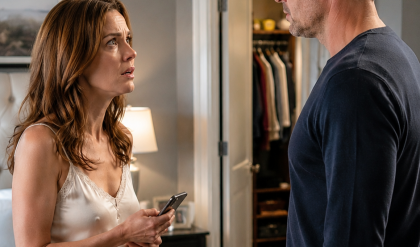
Travis took another step toward her.
She stepped back.
He stopped.
“I’ll do anything,” he said. “Therapy. Full transparency. Phone, email, accounts, everything. I’ll pay Elena support if the baby is mine, but she means nothing to me. You are my life.”
“No,” Miranda said quietly. “I was your life when it was convenient.”
His face crumpled.
She went upstairs and locked the bedroom door.
That night, she did not sleep.
At 3:00 a.m., she walked through the house barefoot, touching furniture like she was saying goodbye to a museum exhibit. The library. The kitchen. The sunroom where she hosted donor meetings. The guest suite where her parents stayed during holidays. The nursery they had once discussed but never furnished.
By dawn, she was outside walking the estate grounds in a sweater and boots.
The grass was damp.
The sky over Westchester turned pale gray.
Divorce.
The word scared her.
Not because she was helpless. She was not. But divorce meant admitting the dream had broken beyond repair. It meant lawyers, papers, settlements, gossip, questions. It meant becoming a woman other people discussed in whispers.
Still, another thought followed.
Staying would mean living inside the affair forever.
Elena’s pregnancy, if real and if Travis’s, would not be a scandal that passed. It would become a child. A child who deserved care, yes, but also a permanent doorway between Travis and the woman who walked into Miranda’s home to claim a future.
Miranda called her friend Dr. Jessica Pace that morning.
Jessica was a counselor in upstate New York, one of the few people who had known Miranda before the Rutherford name became attached to her.
“Can I come today?” Miranda asked.
Jessica heard her voice and said, “Come now.”
In Jessica’s converted Victorian office, with sunlight through lace curtains and tissues on the table between them, Miranda told the whole story.
Jessica listened without interrupting.
When Miranda finished, she said, “You don’t have to decide everything today. But you do need clarity. First, paternity. Second, whether Travis is remorseful or just terrified of losing his life. Third, what you can live with.”
“What if I still love him?” Miranda whispered.
“Then you grieve the fact that love did not protect you from this.”
That sentence stayed with Miranda all the way home.
Love had not protected her.
So now she would have to protect herself.
Part 4: The Envelope That Ended the Marriage
The paternity test arrived on a cold morning that felt designed for bad news.
The envelope sat on the side table in the Rutherford living room, plain and white, almost insulting in its simplicity. A few sheets of paper inside it would decide what remained of Miranda’s marriage.
Travis stood near the fireplace.
He looked like he had not slept in weeks.
Miranda believed he was suffering. That did not heal her. It simply made the room more complicated.
“Do you want me to open it?” he asked.
“No.”
Her hand shook as she tore the envelope.
The report was written in clinical language. Numbers. Probability. Genetic markers.
Then the line that mattered.
Travis Rutherford is confirmed to be the biological father with 99.9% probability.
Miranda read it once.
Then again.
A strange quiet came over her.
She had expected to cry. Rage. Collapse. But the body sometimes protects itself by becoming still. It knows when the heart cannot afford drama.
Travis whispered, “Miranda.”
She folded the letter carefully.
He tried to touch her shoulder.
She stepped away.
“No.”
“I’m sorry.”
“I know.”
“I never wanted this.”
“You wanted something.”
His eyes filled.
“Elena manipulated me.”
Miranda looked at him then, and for the first time in days, anger burned hotter than grief.
“Don’t do that.”
His mouth closed.
“You are not a teenager. You are not a confused boy. You are a grown man with a wife, a fortune, a company, and choices. If Elena manipulated you, it was because you gave her access to places she never should have been.”
The words shook him.
They shook her too.
Because they were true.
The child was innocent. Miranda knew that. She had enough decency not to blame a baby for the failures of adults. But innocence did not erase consequence. If Travis was the father, he had responsibilities. Financial, legal, emotional. Elena would be part of his life forever in some form.
And if Miranda stayed, Elena would be part of hers too.
“I can’t live with this,” Miranda said.
Travis began crying.
Not performative tears. Real ones. His shoulders sagged. His face folded in on itself.
“Please,” he said. “Tell me what to do.”
Miranda almost answered.
That scared her.
Because for years, she had managed his emotions. Smoothed his shame. Translated his mistakes into problems they could solve together. Some part of her still wanted to reach for the wounded man in front of her.
But another part, quieter and stronger, asked: Who reached for you when Elena sat on your sofa?
The next morning, Miranda drove to Manhattan and met James Delgado, one of the most respected divorce attorneys in the city.
His office was sleek, calm, and high above the noise of the street. He shook her hand with professional gentleness.
“I’m sorry we’re meeting under these circumstances,” he said.
Miranda gave him the paternity test.
“It’s confirmed. The child is his. I want to file.”
Delgado did not rush her.
That mattered.
He explained property division, spousal support, the Westchester estate, confidentiality issues, public exposure, Elena’s potential claims, and how child support for Elena’s baby could affect Travis’s future financial obligations. He spoke plainly, not cruelly.
At the end, he asked, “Are you sure?”
Miranda looked out the window at Manhattan’s gray skyline.
“I’m not sure about anything emotionally,” she said. “But legally, yes. File.”
Signing the papers felt like cutting through rope with shaking hands.
When she returned to the estate that evening, Travis was waiting in the foyer.
He saw the folder.
His face collapsed before she spoke.
Miranda pressed the divorce papers against his chest.
“I filed.”
He grabbed the documents, read the top page, and then something inside him broke open.
He sank to his knees on the marble floor.
A billionaire.
A man who had negotiated nine-figure deals.
A man who had built a company from nothing and charmed investors into believing he could predict the future.
Now kneeling at his wife’s feet.
“Miranda, please,” he cried. “Please don’t do this. I’ll give her nothing beyond what the law requires. I’ll sell the company. I’ll move. I’ll do therapy every day. I’ll—”
“Stop.”
He clutched her hand.
She pulled it free.
The motion hurt them both.
“I begged you for honesty before I begged a lawyer for protection,” she said. “You chose which one to give me.”
His head bowed.
“I love you.”
Miranda’s tears finally fell.
“I know. That’s what makes this so sad.”
Then she walked upstairs.
Behind her, Travis Rutherford remained on his knees in the foyer, holding the papers that proved money could buy almost anything except the moment before betrayal.
Part 5: The Courthouse Steps
Divorce did not move like a clean line.
It moved like weather.
Some mornings, Miranda woke relieved. Other mornings, she forgot for three seconds and reached toward Travis’s side of the bed before remembering he no longer slept there. Grief is cruel in small domestic ways. It hides in towels, coffee mugs, the second toothbrush you finally throw away.
Travis moved into the Manhattan penthouse at her request. He sent flowers every day for two weeks. She asked the staff to stop bringing them past the foyer. The next week, handwritten letters arrived. She put them in a drawer unread.
Elena, meanwhile, discovered the power of visibility.
She appeared outside the hospital in designer maternity clothes. She let photographers catch her leaving an obstetric appointment. She issued no statements, which was its own statement. Tabloids filled the silence.
Rutherford Love Child Confirmed
Billionaire’s Wife Files for Divorce
Mistress Demands Support
Elena’s attorney sent requests for living expenses, prenatal care, accommodations, and “security appropriate to the child’s future standing.”
Miranda forwarded every message to Delgado.
She refused to respond directly.
Then came the preliminary hearing at the Westchester County Courthouse.
The sky was slate gray. The building looked severe, almost theatrical, as if designed to remind people that private pain becomes public once filed.
Miranda arrived with Delgado.
Travis arrived ten minutes later with his attorney, looking thinner than before. Their eyes met on the courthouse steps. For a second, Miranda saw the man from the literacy gala years ago. The one who asked real questions. The one who made her laugh.
Then the courthouse doors opened, and the present returned.
Inside, the judge was brisk and unsentimental. Delgado outlined adultery, confirmed paternity, financial concerns, and Miranda’s request for temporary exclusive use of the Westchester estate until settlement. Travis’s attorney emphasized remorse, willingness to provide support, and hope for reconciliation.
The judge looked over her glasses.
“Hope for reconciliation is not a legal defense to a divorce petition.”
Miranda nearly laughed.
It was the first useful sentence anyone had said all morning.
Temporary orders were entered. Financial disclosures scheduled. Property negotiations set.
As they exited, Elena appeared in the corridor.
Miranda stopped.
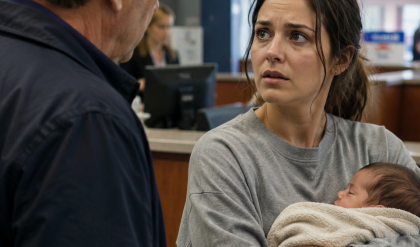
Elena wore a fitted taupe dress, one hand resting on her growing belly. Travis went rigid.
“Travis,” Elena said softly. “I was in a separate hearing room discussing support. I wanted to check on you.”
No, Miranda thought. You wanted to be seen here.
Elena turned to her.
“Miranda, you look well. We should talk eventually. This child binds us together whether we like it or not.”
Miranda felt something cold and clean move through her.
“There is no we.”
Elena blinked.
“You may have Travis’s child. That is between you, Travis, and the court. But you and I are not partners in anything.”
Elena’s face hardened.
“I was only trying to be civil.”
“No,” Miranda said. “You were trying to enter another room that does not belong to you.”
Delgado touched Miranda’s arm.
“Let’s go.”
Outside, paparazzi waited.
Of course they did.
Someone had tipped them off.
Miranda did not have to ask who.
Camera flashes burst like lightning.
Travis followed them down the steps.
“Miranda,” he called.
She kept walking.
“Please.”
She stopped.
Bad idea.
But she stopped.
Travis dropped to his knees on the courthouse steps in front of everyone.
Photographers shouted.
“Mr. Rutherford!”
“Travis, look here!”
“Miranda, are you taking him back?”
Travis did not seem to hear them.
“I’ll spend the rest of my life making it right,” he said, tears on his face. “Please don’t finalize this. I’ll do anything.”
For a moment, the world narrowed to the man kneeling before her.
The old Miranda wanted to kneel too. To hold his face. To say they would find a way. To rescue the love from the wreckage because surely something that once felt so real deserved that.
But the woman standing on those courthouse steps had learned something the old Miranda had not.
Not every broken thing should be restored.
Some things break because they were built on a fault line.
She crouched slightly, not touching him.
“I believe you are sorry,” she said quietly. “I do. But your sorrow does not rebuild my trust. And your regret does not become my responsibility.”
Travis covered his face.
Miranda stood.
Delgado guided her into the car.
The next morning, the photo was everywhere.
Billionaire Begs Wife on Courthouse Steps
People called it romantic.
Pathetic.
Powerful.
Too late.
Miranda called it proof that public desperation is still not accountability.
Then she began looking for a home that did not have marble floors.
Part 6: Beacon
Several months later, Miranda Rutherford became Miranda Caldwell again in a quiet legal filing that did not trend online.
The final divorce decree divided assets, sealed sensitive records, and sold the Westchester estate. Travis kept most of Rutherford Enterprises. Miranda kept enough money to live ten lives and enough sadness to know money was not the point.
Elena gave birth to a baby boy.
The child was healthy.
Miranda was grateful for that in a distant, human way. No child deserved to arrive carrying adult sin like luggage.
Travis saw the baby through scheduled arrangements and lawyers. Whatever Elena had imagined—marriage, mansion, replacement life—it did not happen. Travis provided financial support, but the affair soured into logistics almost immediately. That, Miranda thought, was the nature of relationships built from betrayal. Once the thrill has to become a calendar, very little romance remains.
Miranda moved to Beacon, a riverside town about an hour north of the city.
Her new townhouse was small by Rutherford standards, which meant normal by human standards. Brick front. Blue door. Warm kitchen. A narrow staircase that creaked. Windows that looked toward the Hudson River. She brought her antique desk, her favorite armchair, books, two rugs, and the copper mixing bowl her mother had given her when she first moved to Manhattan.
The first morning there, she made tea in pajamas and stood barefoot in the kitchen.
No staff.
No marble echo.
No florist arranging sympathy flowers she did not want.
Just sunlight on wood floors and the sound of the kettle.
She cried then.
Not from grief.
From quiet.
Celeste Harrington came by with wildflowers and an expression that was only half society polish now.
“Darling,” Celeste said, hugging her hard. “This place is charming.”
“It’s small.”
“It’s human. Westchester always looked like a museum where everyone was afraid of touching the chairs.”
Miranda laughed.
That laugh startled her.
It had been a long time.
They sat at the kitchen table drinking tea, and Celeste asked, “Have you heard from him?”
“Texts. Apologies. Updates about the baby. I don’t respond.”
“You don’t have to.”
“I know.”
That knowledge still felt new.
Over the following months, Miranda built a life piece by piece.
She joined the local library board. Then helped them repair their grant program. Then organized a book drive that became a literacy festival. Then, because small good things tend to grow when tended properly, she founded the Caldwell Literacy House in a renovated brick building near Main Street.
Children came after school.
Adults came for reading support without shame.
Immigrant families came for language classes.
The first time a nine-year-old girl read a full page aloud and looked up shocked by her own voice, Miranda went to the supply closet and cried.
That was healing.
Not forgetting Travis.
Not pretending Elena never walked into her foyer.
Healing was discovering that the love she had poured into the wrong place could still become useful somewhere else.
One winter afternoon, Travis came to Beacon.
She saw him through the window before he knocked.
He looked older. Not destroyed. Not villainous. Just changed in the way people change when consequences continue after headlines move on.
Miranda opened the door but did not invite him in.
“Hi,” he said.
“Hello, Travis.”
“I was nearby.”
“No, you weren’t.”
He smiled sadly.
“No. I wasn’t.”
They stood in the cold.
“I wanted to see how you are.”
“I’m well.”
“I heard about the literacy house.”
“I’m proud of it.”
“You should be.”
Silence.
Then he said, “The baby is named August.”
Miranda absorbed that.
“That’s a lovely name.”
“He’s healthy.”
“I’m glad.”
Travis looked at her for a long moment.
“I miss you.”
The words no longer pierced the way they once might have.
“I know.”
“I’m not asking anything.”
“Good.”
“I just wanted to say I understand now that kneeling wasn’t enough.”
Miranda folded her arms against the cold.
“What do you understand?”
“That I wanted forgiveness because I couldn’t stand seeing myself clearly. I wanted you to make me feel like I was still a good man.”
She nodded slowly.
“That sounds true.”
“I’m trying to become one.”
“I hope you do.”
He looked past her, into the warm glow of the townhouse.
“You seem peaceful.”
“I am, sometimes.”
“That’s good.”
“Yes.”
He stepped back.
“I won’t bother you again.”
“Take care of your son,” Miranda said.
“I will.”
She watched him walk away.
Then closed the door.
Not slammed.
Closed.
There is a strength in that too.
Part 7: The Life After the Apology
Years later, people still remembered the courthouse photograph.
Travis Rutherford on his knees.
Miranda standing above him, face broken but resolved.
The image had become shorthand for scandal, betrayal, public regret. People used it in think pieces about infidelity. Podcasts dissected her expression. Some called her cold for not taking him back. Others called her brave. Most of them knew very little about what courage actually costs in a quiet kitchen at midnight.
Miranda stopped reading those pieces after the first year.
The internet loves a dramatic moment because it does not have to live with the aftermath.
She lived with the aftermath.
She lived with the paperwork, the grief, the moving boxes, the first holidays alone, the awkward social invitations, the nights when loneliness felt like a punishment for choosing herself. She also lived with the new morning light in Beacon, the children at Caldwell Literacy House, the peace of a home where no one lied upstairs while she hosted guests downstairs.
Healing was not cinematic.
It was Tuesday after Tuesday.
One ordinary afternoon, a young woman named Rebecca came into Caldwell Literacy House with two children and a bruise fading near her jaw. She said she wanted help filling out job applications. Miranda knew enough not to ask too much too quickly.
They sat together at a table while the children colored nearby.
Rebecca struggled to read some of the forms. Her hands shook when she wrote.
“My husband always said I was too stupid for office work,” she said, trying to laugh.
Miranda looked at her.
“That sounds like something he said to keep you from finding out he was wrong.”
Rebecca stared at her.
Then began to cry.
Miranda sat with her until the tears passed.
I think that is what pain can become if we refuse to let it rot inside us. Not wisdom exactly. Wisdom sounds too clean. More like recognition. The ability to see another person’s cage because you still remember the shape of your own.
Caldwell Literacy House expanded into legal literacy workshops: how to read lease agreements, custody notices, employment contracts, financial disclosures. Miranda partnered with attorneys who volunteered monthly. James Delgado came twice a year and complained lovingly about the old building’s terrible coffee.
Celeste became a donor.
Then a board member.
Then, to her own horror, someone who cared about meeting minutes.
Travis’s life became quieter too. Rutherford Enterprises survived, though not untouched. Elena eventually moved to Los Angeles with August after settling into a co-parenting arrangement that involved lawyers, calendars, and very little glamour. She sent Miranda one letter years later.
I was cruel to you because I thought taking your place would make me feel chosen. It didn’t. I’m sorry.
Miranda read it once.
Then placed it in a file.
She did not respond.
Some apologies deserve acknowledgment in the soul, not access in the life.
On what would have been her fifteenth wedding anniversary, Miranda drove to Vermont to visit her parents.
Her mother baked apple pie.
Her father asked careful questions and said little, which was his way of making room for answers to arrive at their own pace. After dinner, Miranda walked with him down the dirt road near their old house.
“Do you regret marrying him?” her father asked.
Miranda watched the trees move in the evening wind.
“I regret what he did. I regret what I ignored. I don’t regret who I became after.”
Her father nodded.
“That’s a good answer.”
“It took me years to get it.”
“Good answers usually do.”
That night, Miranda slept in her childhood bedroom under a quilt her grandmother made. For the first time in years, she dreamed of the Westchester estate and did not wake crying.
In the dream, she walked through the front door, room by room, turning off lights.
Not angry.
Not afraid.
Just done.
The final room was the library. Travis stood there, younger, sorrowful.
“I’m sorry,” dream-Travis said.
“I know,” dream-Miranda replied.
Then she turned off the light.
When she woke, morning filled the room.
She smiled.
Not because the past had vanished.
Because it no longer owned the house inside her.
Five years after Elena first stood at her door in white, Miranda stood before a crowd at the opening of the second Caldwell Literacy House location.
The new building was bright, full of windows, with a children’s reading room painted yellow.
Reporters asked about her divorce sometimes, though less now. That day, one young journalist asked what had made her rebuild her life instead of retreating from public work.
Miranda considered the question.
Then answered honestly.
“Betrayal can make you feel foolish for having trusted. But trust was not my failure. His dishonesty was his. My job was not to become smaller because someone else broke faith. My job was to decide what kind of woman I wanted to be afterward.”
She looked through the glass at children gathering around a bookshelf.
“I wanted to be useful. And free.”
That evening, she returned to her Beacon townhouse. The blue door stuck slightly in winter, as always. She pushed it open with her shoulder, set down her keys, and placed fresh flowers in the copper bowl because she had never found a better vase.
Her home was quiet.
Warm.
Hers.
On the mantel sat a photograph from the literacy house: a child reading aloud, eyes wide with pride. Beside it, a small framed quote her mother had sent:
A new dawn does not erase the night. It proves you survived it.
Miranda lit a lamp, made tea, and sat by the window overlooking the Hudson.
The river moved steadily in the dark.
So did she.
Travis had knelt.
Elena had claimed pregnancy.
The tabloids had shouted.
The courts had stamped papers.
But none of that was the ending.
The ending was this: a woman who had once believed her life was over because a man betrayed her discovered that her life had only been returned to her.
Not as a fairy tale.
As something better.
A life she chose.
A life she built.
A life no mistress, no billionaire, no scandal, and no apology could ever take from her again.